Quick Facts
- The Profit Threshold: Mortgage interest rates for second homes are typically 0.25% to 0.75% higher than primary residence rates, making aggressive payoffs more attractive for recent buyers.
- The Opportunity Cost: If your mortgage rate is below 4%, the after-tax return on market investments historically outpaces your interest savings.
- The Liquidity Factor: Paying off a second home locks your cash into a non-liquid asset, which can be risky if you do not have a dedicated emergency fund.
- The Tax Barrier: You can only deduct interest on up to $750,000 of combined debt across their primary and second homes, and only if you itemize deductions.
- The Strategic RMD: Using an unneeded required minimum distribution to chip away at principal can significantly reduce total interest paid over the life of the loan.
Deciding on a vacation home mortgage payoff depends on your current interest rate and liquidity needs. While paying off debt offers guaranteed interest savings and financial peace of mind, it ties up cash in an illiquid asset. In a high-rate environment, paying down a mortgage with an interest rate above 6% may be more beneficial than conservative investing, whereas rates below 4.5% often favor keeping the cash in diversified market investments.
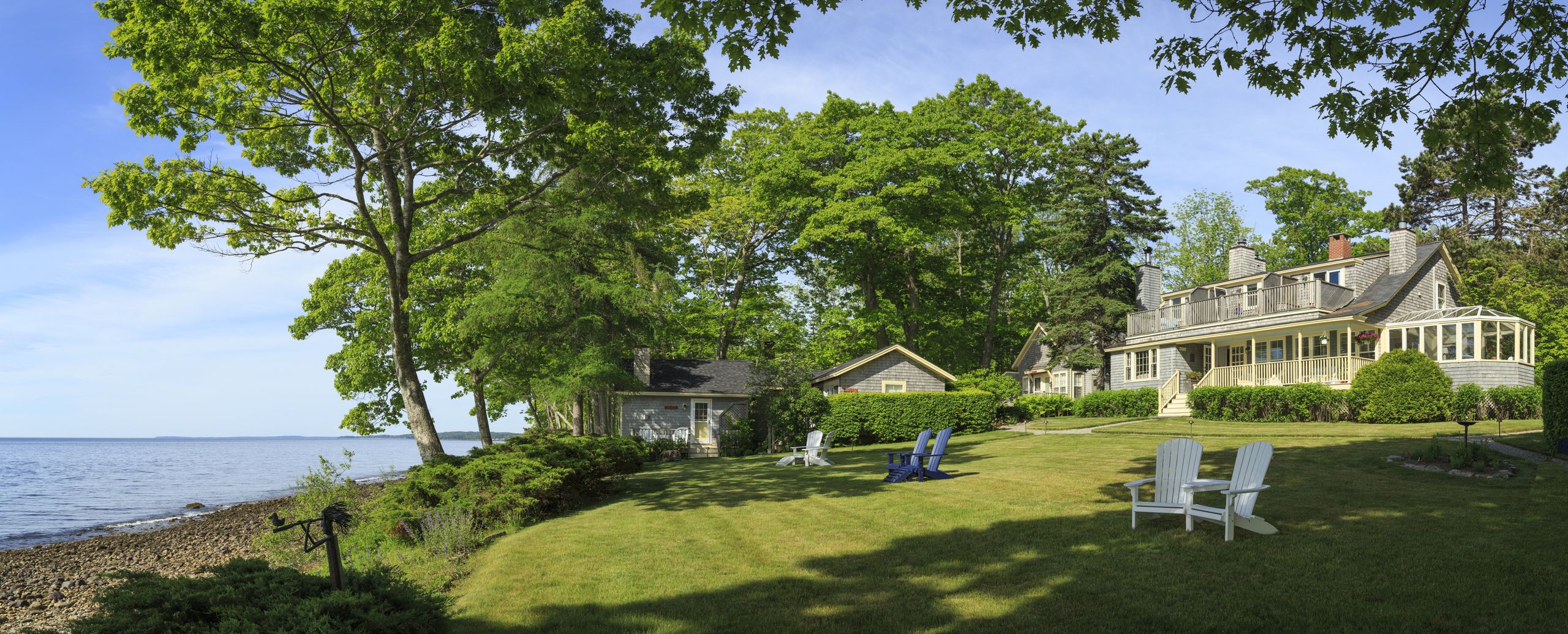
When you look out over the deck of your lake house or mountain cabin, the last thing you want to think about is an amortization schedule. Yet, for many high-net-worth individuals and retirees, the question of whether to eliminate that debt remains a constant financial puzzle. In the current economic climate, the old rules of thumb are shifting. With the 2026 tax law changes on the horizon and a fluctuating interest rate environment, owners must look past simple math and consider their entire asset allocation.
The choice is rarely about just one factor. It is a tension between the mathematical certainty of saving on interest and the strategic flexibility of having liquid cash. Whether you are nearing retirement or looking to optimize a growing property portfolio, understanding how your vacation home debt interacts with your broader wealth is essential for long-term stability.
The Rule of Tiers: Evaluating Interest Rate ROI
To make an objective decision, you must treat your vacation home mortgage payoff as an investment. Paying off a loan is functionally the same as buying a bond that pays a guaranteed, tax-free return equal to your interest rate. If you have a mortgage at 7%, paying it off is like finding an investment that pays a guaranteed 7% return. In a volatile market, that is a hard deal to beat.
However, the calculation changes based on when you secured your financing. We can generally segment the decision into three tiers based on the interest rate environment of the last decade:
- The Low-Rate Legacy (Below 4.5%): If you refinanced or bought during the historic lows of 2020 or 2021, you likely have a rate that is lower than the current yield on many high-yield savings accounts or government bonds. In this scenario, the opportunity cost analysis almost always favors staying the course. Investing your extra cash in a diversified portfolio or even a money market fund allows your money to work harder than it would by paying down cheap debt.
- The Transition Zone (4.5% to 6.0%): This is where your personal risk tolerance and tax situation come into play. Once you factor in the potential tax benefits of the second home mortgage interest deduction, your effective rate might be closer to 4%. If your portfolio diversification is already solid, you might choose a hybrid approach—paying a little extra each month while keeping the bulk of your capital in the market.
- The High-Rate Reality (Above 6.0%): For those who purchased more recently, the impact of high interest rates on second home payoff is significant. Because lenders view second homes as higher risk, these rates often hover near or above 7%. At this level, paying down the mortgage usually offers a better risk-adjusted return than most conservative investment portfolios.
Decision Matrix: Payoff vs. Invest
| Mortgage Interest Rate | Market Condition | Recommended Strategy | Primary Focus |
|---|---|---|---|
| 3.0% - 4.0% | Moderate Growth | Keep Mortgage | Liquidity & Market Gains |
| 4.5% - 5.5% | Volatile | Hybrid | Balance & Risk Mitigation |
| 6.5% + | Any | Aggressive Payoff | Guaranteed ROI |

The Liquidity Trap: Why Cash is King in 2026
One of the most overlooked aspects of paying off second home mortgage early is the concept of one-way liquidity. Once you send a $100,000 check to your mortgage servicer, that money is "in the walls." To get it back out, you would need to sell the property or take out a home equity line of credit—the latter of which might come with a much higher interest rate than the loan you just paid off.
Maintaining cash flow flexibility is vital as we approach 2026. Economic cycles are becoming less predictable, and having liquid assets provides a buffer that home equity cannot. This is particularly true for vacation properties, which are often the first assets to lose value or liquidity during a market downturn. If you exhaust your cash reserves for a vacation home mortgage payoff, you risk being "house rich and cash poor."
The liquidity risks of paying off second home involve more than just emergency savings. It is about the ability to seize new investment opportunities. If the real estate market corrects or a new business venture arises, having that cash in a brokerage account allows you to act. If it is tied up in a mountain house, you are a spectator. Before committing to a full payoff, ensure you have at least 12 to 24 months of total living expenses in liquid accounts to maintain a hedge against market volatility protection.
Pro-tip: The Amortization Trap Remember that mortgages are front-loaded with interest. If you are 20 years into a 30-year loan, most of your monthly payment is already going toward principal. Paying off a loan in its final years saves far less in total interest than making extra payments in the first five years. Check your statement—if your interest portion is already negligible, your cash is likely better spent elsewhere.
Retirement Tactics: Using RMDs and Tax Strategy
For those over age 73, the tax code introduces a new variable: the required minimum distribution. Many retirees find themselves in a position where they do not actually need their required minimum distribution for daily living expenses. Using a portion of this mandatory withdrawal for a vacation home mortgage payoff can be a productive way to manage the tax hit while reducing long-term debt.
However, using rmd for mortgage payoff is not always the most tax-efficient move. Since the RMD counts as taxable income, using it to pay off a mortgage doesn't reduce your tax bill; it just changes where the money goes after the IRS takes its cut. A more sophisticated strategy might involve a Qualified Charitable Distribution (QCD) for your philanthropic goals, while using other taxable assets for the mortgage.
The tax benefits of second home mortgage interest deduction have also diminished for many since the 2017 tax reforms. Because the standard deduction is now so high, many homeowners no longer find it beneficial to itemize. If you are not itemizing, your mortgage interest is being paid with 100% after-tax dollars, making the payoff even more attractive because the "subsidy" from the government has effectively vanished. Always consult with a professional regarding retirement income planning to see how a payoff fits into your specific tax bracket and the sequence of returns.
The Psychology of Debt: Peace of Mind vs. The Math
While spreadsheets can tell you the ROI of a payoff, they cannot measure the feeling of owning your getaway home free and clear. For many, paying off vacation home for peace of mind in retirement is the ultimate goal. Eliminating a monthly payment reduces your "burn rate," which provides a massive psychological cushion during market downturns.
This is closely related to the sequence of returns risk. If you are retired and the stock market drops 20%, having to sell shares to pay a mortgage on a second home can permanently damage your portfolio's longevity. If the home is paid off, you have the flexibility to stop drawing as much from your investments, allowing them time to recover.
Financial peace of mind is a valid investment objective. If the existence of a mortgage causes you stress or late-night anxiety, then the "math" doesn't really matter. However, this only works if you have the behavioral discipline to actually save the money you were previously sending to the bank. A vacation home mortgage payoff should simplify your life, not create a new set of constraints.

FAQ
Is it a good idea to pay off my vacation home early?
It is a good idea if your interest rate is high (above 6%) or if you have reached a stage in life where reducing fixed monthly costs is more important than aggressive market growth. However, if you have a very low interest rate or lack an emergency fund, it is usually better to keep the cash liquid.
What are the tax implications of paying off a second home mortgage?
When you pay off the mortgage, you lose the ability to deduct the interest. However, for many homeowners, this deduction is minimal because the standard deduction is so high. Furthermore, you can only deduct interest on a total of $750,000 in mortgage debt across both your primary and secondary residences.
Should I prioritize paying off my primary or vacation home first?
Generally, you should prioritize the loan with the higher interest rate. Since second home rates are typically 0.25% to 0.75% higher than primary ones, the vacation home is often the better candidate for an early payoff. Additionally, paying off the second home first can simplify your holdings if you plan to sell one of the properties in the near future.
Is it better to invest extra cash or pay off a vacation home mortgage?
This depends on the mortgage payoff vs investing in retirement comparison. If your expected market return (after taxes) is significantly higher than your mortgage rate, investing is mathematically superior. If the mortgage rate is high, the guaranteed return of paying off debt often outweighs the uncertain gains of the stock market.
What are the risks of tying up cash in a vacation home payoff?
The primary risk is a lack of liquidity. Real estate is difficult and expensive to sell quickly. If you face a medical emergency or an economic downturn, you cannot easily access the equity you have "saved" in the home. It is essential to maintain a liquid brokerage or money market account before committing large sums to a payoff.
The quest for a debt-free vacation home is as much about your personal philosophy as it is about interest rates. By weighing your current rate against your need for liquidity and your long-term tax strategy, you can move forward with a plan that protects both your wealth and your peace of mind. Whether you choose an aggressive payoff or a balanced hybrid approach, the goal remains the same: ensuring your second home remains a place of rejuvenation rather than a source of financial strain.