Quick Facts
- Consolidated Valuation: Potential $3.4 trillion empire combined.
- S-1 Highlights: SpaceX 2025 revenue hit $18.7B with $4.9B net loss.
- Merger Probability: Analysts estimate 80% chance by 2027.
- Dilution Risk: Estimated 35% hurdle for current TSLA holders.
- Core Synergy: Low-latency Starlink network powering Tesla’s FSD fleet.
- Recommendation: A SpaceX Tesla merger could propel stock to new highs by creating a trillion-dollar tech conglomerate, but only if the 35% dilution risk is offset by Starlink's massive subscriber growth and FSD integration.
A potential SpaceX Tesla merger could create a $3.4 trillion tech conglomerate by combining Tesla’s electric vehicle and AI expertise with SpaceX’s launch capabilities and Starlink’s satellite broadband. Following the May 2026 S-1 filing, investors are weighing the massive vertical integration benefits against significant equity dilution risks. While the prospect of a unified Musk empire offers unparalleled strategic depth, the immediate Tesla stock valuation impact depends heavily on how the market prices SpaceX’s capital-intensive Starship program and its burgeoning communication network.
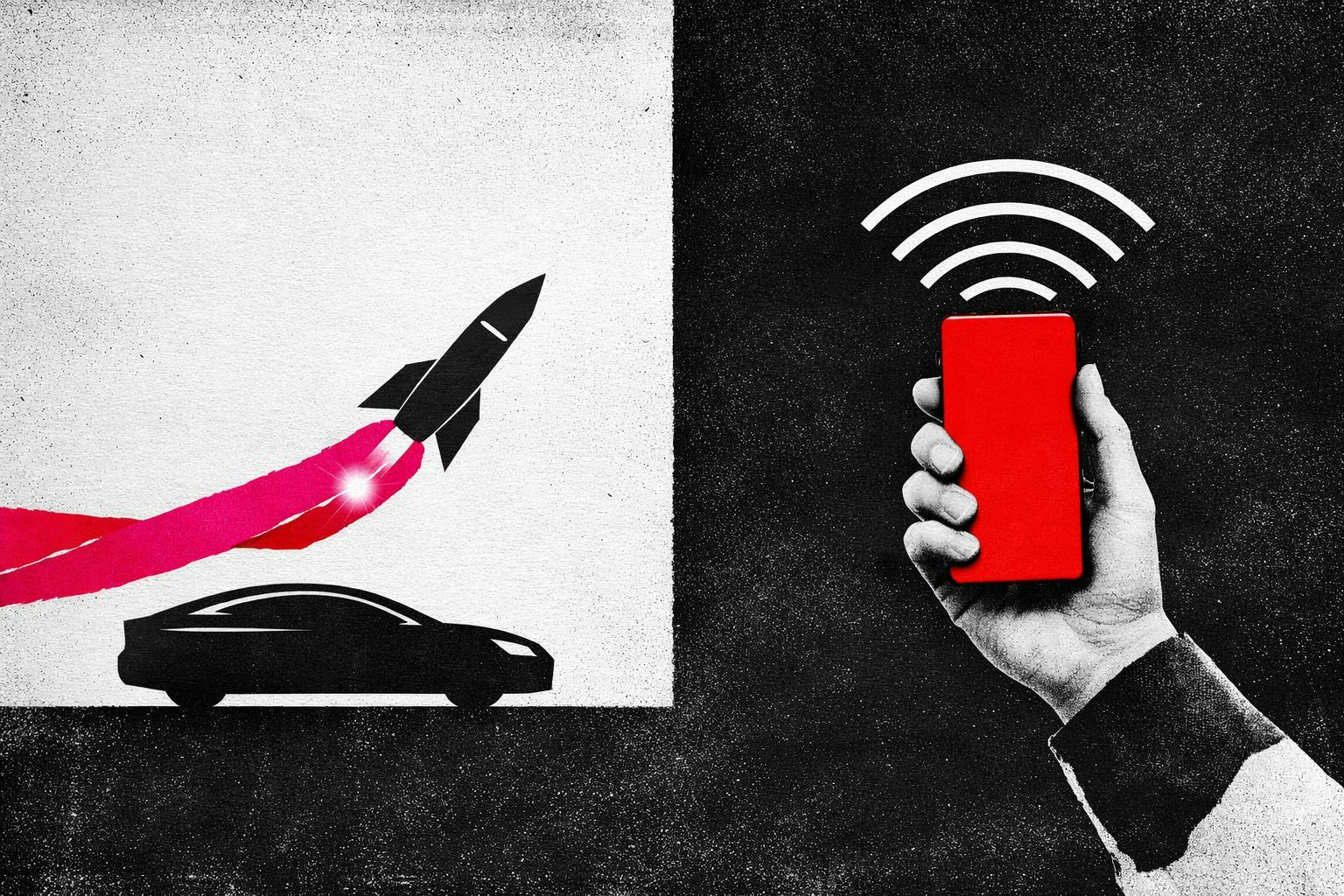
Strategic Synergy: Starlink, FSD, and the Terafab
The speculative chatter surrounding a SpaceX Tesla merger has moved beyond mere science fiction into the realm of rigorous fundamental analysis. At the heart of this potential consolidation is a concept I call Strategic Optionality—the idea that the sum of Elon Musk’s companies is worth far more than its individual parts due to technical cross-pollination. Currently, we are witnessing a soft merger through related-party transactions, with Tesla reportedly engaging in over $800 million in cumulative transactions involving Megapack energy storage units and vehicle fleets sold to SpaceX facilities.
The real prize, however, lies in artificial intelligence infrastructure. The most significant benefit of Elon Musk company consolidation benefits is the co-development of the Terafab, a specialized AI chip project. By pooling resources, Tesla and SpaceX are effectively creating a closed-loop ecosystem where hardware developed for the Starship launch system and autonomous vehicles shares the same silicon foundation. This vertical integration allows for a unified training ground for Tesla’s Full Self-Driving (FSD) algorithms.
Furthermore, the role of Starlink cannot be understated when assessing how Starlink subscriber growth impacts Tesla SpaceX merger potential. A global, low-latency satellite broadband network is the missing link for a truly worldwide autonomous fleet. Standard cellular networks have dead zones and latency issues that hinder real-time FSD updates. With Starlink integrated directly into every vehicle, Tesla solves the connectivity problem, potentially accelerating the rollout of its robotaxi network. For many, investing in Tesla SpaceX speculation is essentially a bet that these cross-company synergies will lead to a dominant position in the race for global AI supremacy.
The Dilution Hurdle: Calculating the Real Impact on TSLA Holders
While the strategic narrative is compelling, the mathematics of the deal presents a steeper climb for the average investor. Calculating Tesla stock valuation after SpaceX S-1 filing requires an honest look at the balance sheet. According to the SpaceX May 2026 S-1 filing, the company generated $18.7 billion in 2025 revenue but carried a $4.9 billion net loss, largely due to the massive research and development overhead for the Starship launch system.
From a portfolio strategy perspective, the primary concern is a Common-control transfer. If Tesla were to acquire SpaceX at its target valuation of $1.75 trillion, it would likely necessitate a massive issuance of new shares. This could lead to an estimated 35% equity dilution for existing shareholders. Investors must ask whether the long-term trillion-dollar valuation is worth the immediate hit to their ownership percentage.
| Factor | Potential Benefit (Synergy) | Critical Risk (Dilution/Financial) |
|---|---|---|
| Market Capitalization | Combined entity could target a $3.4 trillion valuation. | Massive equity issuance could dilute current TSLA holders by 35%. |
| Data Infrastructure | Starlink provides global latency-free connectivity for FSD. | High capital expenditure for satellite constellations strains cash flow. |
| Balance Sheet | Tesla financial liabilities after absorbing SpaceX and xAI are offset by massive asset growth. | Net losses from SpaceX could weigh on Tesla's quarterly earnings per share. |
| Shareholder Equity | Dramatic increase in tangible asset base and book value. | Potential negative Tesla book equity per share impact if the premium paid is too high. |
For institutional investor sentiment to remain positive, the merger would need to be structured in a way that minimizes the impact of high-interest debt. Combining the two could allow for capital structure optimization, where Tesla's relatively clean balance sheet provides the credit for SpaceX’s capital-hungry projects. However, the risk remains that Tesla stock valuation impact could be negative in the short term as the market adjusts to the increased share count and the complexities of managing a multi-industry conglomerate.
Governance and the Musk Playbook
To understand where we are going, we must look at where we have been. The Musk Playbook often involves bold consolidations, as seen in the 2016 acquisition of SolarCity. Critics at the time called it a bailout; supporters called it a masterstroke of vertical integration for energy. When considering a SpaceX Tesla merger, the governance questions are even more pronounced.
Tesla’s public board is subject to significant scrutiny, whereas SpaceX operates with a dual-class voting structure where Musk maintains 85.1% control. Merging these entities into a single tech conglomerate would likely involve a complex restructuring of voting power. The pros and cons of Elon Musk company consolidation for investors often come down to a single question: do you trust the visionary’s control, or do you require independent oversight?
"The 2016 SolarCity merger was the blueprint. While it provided the necessary scale for Tesla's energy division, it also concentrated significant risk within one corporate structure. A SpaceX tie-up would be that same strategy on a planetary scale."
Empire Timeline: The Path to Consolidation
- 2002: SpaceX is founded with a mission to Mars.
- 2004: Elon Musk leads the Series A investment in Tesla.
- 2016: Tesla acquires SolarCity, integrating residential solar with Powerwall storage.
- 2023: xAI is launched to compete in the generative AI space, sharing talent with Tesla and SpaceX.
- 2026: The landmark SpaceX SEC Form S-1 filing reveals $1.75 trillion valuation target.
- 2027: Potential target date for a formal merger as predicted by market analysts.
Three Scenarios: Full Merger, Holding Co, or Continued Status Quo
As an editor focused on investment fundamentals, I see three distinct paths forward for high-stakes investors. Each path carries a different price target and risk profile.
Scenario A: The Full Stock Merger This is the most aggressive outcome. In this scenario, Tesla issues shares to buy SpaceX, creating a single entity under a new ticker symbol. This would maximize technical integration but presents the highest risk of share dilution. Analyst Dan Ives of Wedbush Securities has estimated an 80% probability of a formal merger by 2027, suggesting that the drive for total vertical integration will eventually outweigh the bureaucratic hurdles.
Scenario B: The 'Musk Inc.' Holding Company Under this structure, a new Parent Co would be formed, with Tesla, SpaceX, and potentially xAI as subsidiaries. This simplifies the corporate governance issues and allows each company to maintain separate debt stacks while still benefiting from shared resources. This approach might mitigate some of the negative impact of SpaceX IPO valuation on Tesla stock price targets by allowing investors to value the segments independently.
Scenario C: Continued Strategic Collaboration Musk may choose to avoid the headache of a formal merger altogether. In this scenario, the firms continue to expand their related-party transactions, sharing AI chips and satellite connectivity via licensing agreements. This provides the synergy benefits without the immediate 35% dilution. For those currently investing in Tesla for exposure to SpaceX launch technology, this is the status-quo path that preserves maximum flexibility.
Ultimately, the impact of SpaceX IPO valuation on Tesla stock price targets will be the primary driver of market movement in the coming months. If SpaceX's internal numbers show a clear path to profitability for Starship, the market may more easily stomach the dilutive effects of a merger. For long-term investors, the focus should remain on the underlying assets. Whether unified or separate, the combination of land-based AI and space-based infrastructure represents the most ambitious industrial empire of the 21st century.
FAQ
Will SpaceX and Tesla ever merge into one company?
Market analysts indicate a high probability of a formal merger by 2027. While it is not yet a reality, the strategic alignment in artificial intelligence and the Starlink satellite network suggests that a total consolidation may be the most efficient way to manage Elon Musk's various technology ventures under one capital structure.
Could Elon Musk create a holding company for SpaceX and Tesla?
Yes, a holding company often referred to as Musk Inc. or X Holdings is a frequently discussed scenario. This structure would allow for shared resources and a unified visionary direction while keeping the specific financial liabilities of the aerospace and automotive sectors somewhat segregated, potentially protecting Tesla's balance sheet from SpaceX's high-risk capital expenditures.
What is the relationship between SpaceX and Tesla?
SpaceX and Tesla are separate legal entities that share a CEO and lead investor in Elon Musk. They engage in significant strategic collaboration, including the use of Tesla batteries in SpaceX rockets and the sharing of advanced materials science. They also participate in related-party transactions, such as Tesla purchasing components and SpaceX utilizing Tesla's energy storage solutions at launch sites.
Can you buy SpaceX stock through Tesla?
Currently, you cannot directly own SpaceX shares through Tesla stock. SpaceX remains a private company, although many investors buy Tesla shares as a proxy, believing that the two companies are so fundamentally linked that Tesla's valuation reflects the shared intellectual property and technical synergies of the Musk empire.
Is SpaceX a subsidiary of Tesla?
No, SpaceX is not a subsidiary of Tesla. It is a private aerospace manufacturer and space transportation services company. However, the potential for a SpaceX Tesla merger remains a central theme for investors who believe that eventual consolidation is necessary to fund the massive infrastructure required for Starship and the global rollout of autonomous vehicles.