Quick Facts
- Primary Goal: Slash grocery bills and eliminate unnecessary spending through backwards shopping.
- Core Strategy: Build meals around existing inventory to create a Gap-Only shopping list.
- Saving Potential: Practitioners report an average savings of $50 per week, totaling $2,600 annually.
- Waste Reduction: Minimizes household food waste, which averages between $1,000 and $3,000 per year for most American families.
- Actionable ROI: Consistent meal planning can reduce total household food costs by 20% to 35% by removing impulse buys.
Backwards shopping, or pantry meal planning, is a strategy where you take a full inventory of your kitchen before creating a grocery list, building meals around items you already own to ensure you only purchase missing components. By shifting your routine to a shop your pantry first model, you ensure that existing ingredients are used before they expire, effectively stopping the cycle of grocery inflation and household waste.
The Psychology of the Grocery Store: Why We Overspend
To understand why your grocery bill is creeping up, we have to look at the math and the environment. Since 2020, food prices have seen a staggering 29.4% increase, yet our shopping habits often remain stuck in a pre-inflation era. When you walk into a supermarket without a plan, you are entering a carefully designed trap. Retailers use sensory triggers—the smell of rotisserie chicken, the vibrant colors of the produce section, and end-cap "deals"—to drive an impulse purchase. Statistics show that unplanned buys account for 33% to 62% of supermarket sales.
Managing your household budgeting starts with recognizing these traps. The perimeter of the store is where you are most vulnerable to sensory marketing. Conversely, the center aisles, while containing processed items, are often unemotional zones where you can find bulk staples. However, the biggest mistake isn't what you buy; it is what you already have at home. When you fail to shop your pantry first, you rely on memory, which is a poor tool for inventory management. You end up with four jars of cumin and three boxes of pasta, while the chicken in the back of your freezer slowly develops freezer burn. Mastering backwards shopping is about reclaiming control before you ever step foot inside a store.

Step 1: The Kitchen Audit and Inventory Management
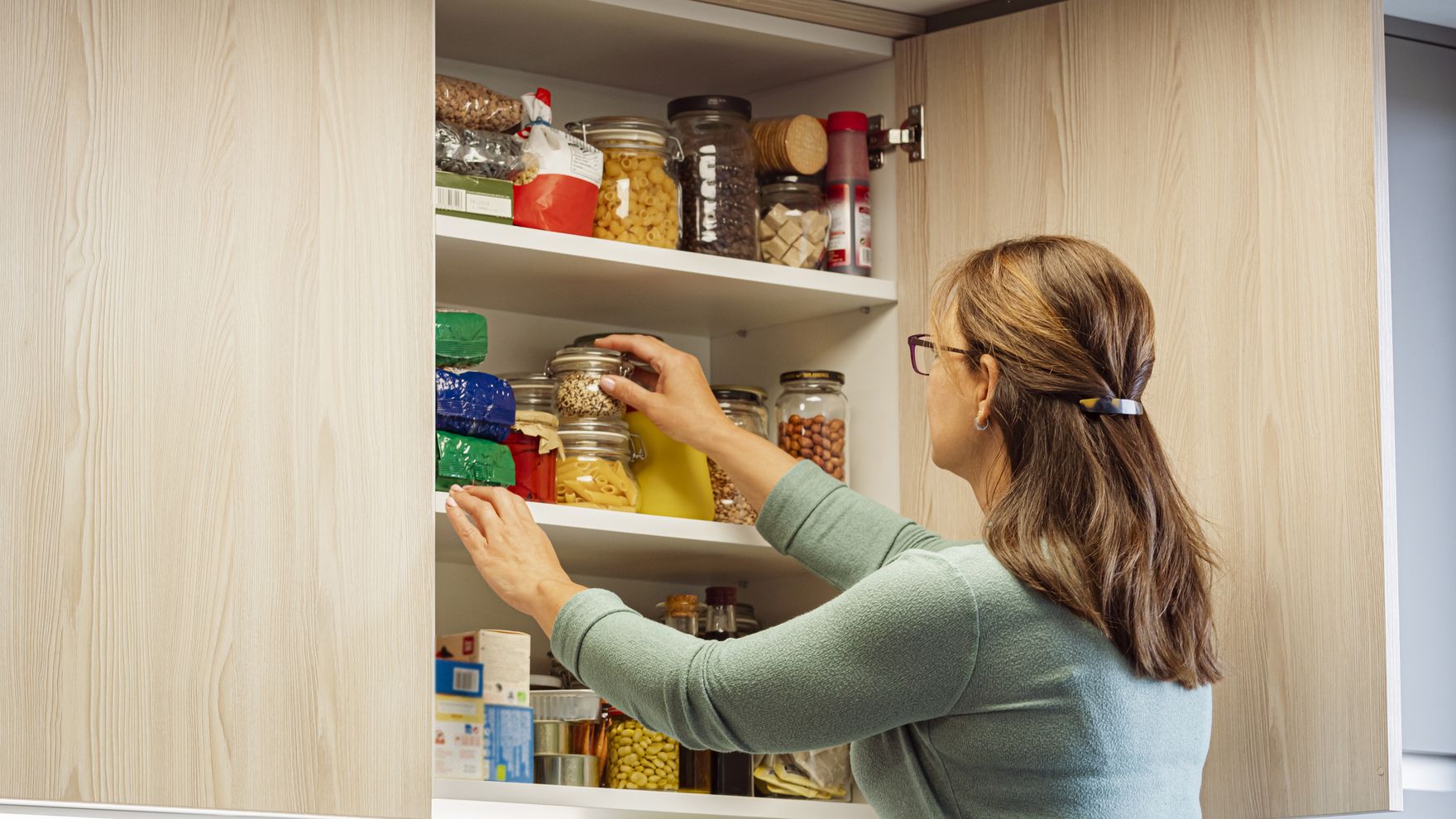
Effective pantry meal planning begins with a thorough kitchen audit. This isn't just a quick glance into the cupboard; it is a tactical assessment of your assets. Start by clearing out your pantry, fridge, and freezer. As you handle each item, check for quality dates. It is important to distinguish between "Use by" (safety) and "Best if used by" (quality) dates to avoid throwing away perfectly good food.
To maintain order, implement the first-in first-out (FIFO) method. Just like a professional kitchen, move older items to the front and place new purchases in the back. This ensures you are constantly rotating your stockpile and reducing food waste with the shop your pantry first method. Once you have a clear view, you need to document it. Here is how to create a kitchen inventory for meal planning that actually works:
- Categorize by Zone: Divide your list into Freezer, Pantry (Dry Goods), and Cold Storage (Fridge).
- Focus on Proteins: These are your most expensive components. Note down the frozen chicken, the canned tuna, or the lentils.
- Identify the "Use-Now" items: Highlight anything that needs to be eaten within the next 48 to 72 hours.
- Digital vs. Paper: Use a simple spreadsheet or a magnetic notepad on the fridge. The key is visibility; if you can't see it, you won't eat it.
This process is the foundation of household budgeting. By treating your kitchen like a small business, you reduce the likelihood of buying expensive duplicates. When you know exactly what you have, you are less likely to fall for a "buy one get one" deal on something you already own in abundance.
Step 2: Reverse Meal Planning for Beginners
Most people plan meals by looking at a recipe online and then buying every ingredient required. This "forward" planning is why grocery bills spiral. Instead, you need to learn how to do reverse meal planning for beginners. Instead of starting with a recipe, you start with the ingredient. If your audit revealed a bag of frozen shrimp and a half-box of quinoa, those become the anchor points for your meal.
To simplify this, used a 4-part meal architecture:
- The Protein (Existing): The core of the dish (e.g., ground beef, black beans).
- The Grain/Starch (Existing): The filler (e.g., rice, pasta, potatoes).
- The Vegetable (Existing or Need): The nutrition (e.g., frozen spinach, fresh broccoli).
- The Sauce/Seasoning (Existing): The flavor profile (e.g., soy sauce, curry paste, marinara).
By focusing on these components, you move from recipe-heavy cooking to component-based cooking. This flexibility is how to save on groceries because it allows you to utilize what you have rather than what a cookbook tells you to buy. Additionally, aim for a no-spend grocery week once every month. During this week, your challenge is to eat exclusively from your existing stock. This helps clear out your freezer and rotate your stockpile rotation effectively. Planning a no-spend grocery week using pantry staples can reveal just how much food you truly have, often uncovering enough ingredients for four or five days of full meals.
Step 3: Mastering the Gap-Only Shopping List
Once you have mapped out your meals based on your inventory, you will inevitably find a few missing pieces. This is where the Gap-Only list comes in. If you are making chicken tacos but lack tortillas and lime, your shopping list should only contain those two items.
The danger of many warehouse club shopping trips is the "just-in-case" mindset. You go in for milk and leave with a 48-pack of granola bars. A disciplined Gap-Only list prevents this. When you are in the store, stick to the following rules:
- The 3-Item Limit: Allow yourself no more than three items that were not on your original list. This accommodates genuine needs while curbing impulse purchase behavior.
- Unit Price Comparison: Just because it is a bulk package doesn't mean it is cheaper. Always check the price per ounce.
- Avoid Pre-Cut Produce: You pay a significant premium for convenience. Buy whole vegetables and spend ten minutes on batch cooking and prep at home.
The goal of pantry meal planning to save $50 a week is reached in the aisles. Every time you cross off an item because you found a substitute at home, you are contributing to your long-term money planning goals.

The Secret Weapon: Functional Ingredient Substitution
One of the biggest reasons people abandon pantry meal planning is the belief that they need the "exact" ingredient. In reality, most ingredients serve a functional role—fat, acid, salt, or texture. If a recipe calls for sour cream but you have Greek yogurt, swap it. If you need rice but have a surplus of pearl barley, use the barley.
Learning budget friendly pantry staples substitution tips is like giving yourself a raise. It reduces the frequency of store trips, which are the primary driver of overspending. Use the following table as a guide for common kitchen swaps:
| If the recipe calls for... | Use this from your pantry instead... | Functional Role |
|---|---|---|
| Rice | Quinoa, Barley, or Farro | Starch/Base |
| Sour Cream | Plain Greek Yogurt | Fat/Creamy Texture |
| Lemon Juice | Apple Cider Vinegar or White Wine | Acid |
| Breadcrumbs | Crushed Crackers or Oats | Binder/Crunch |
| Soy Sauce | Tamari or Coconut Aminos | Salt/Umami |
| Chicken Broth | Bullion cube + Water or Vegetable scraps stock | Liquid/Flavor |
By becoming more comfortable with ingredient substitution, you finalize the shift toward a more sustainable and stable financial habit. You are no longer at the mercy of a specific grocery list; you are the manager of your own domestic supply chain.
FAQ
How much money can you save by meal planning from your pantry?
The average household can save approximately $50 per week by adopting a shop your pantry first approach. This accounts for the reduction in impulse buys and the elimination of food waste, which can save a family up to $2,600 over the course of a year. By reducing your reliance on expensive convenience items and duplications, you significantly lower your overall food expenditure.
How do I take a pantry inventory for meal planning?
Start by removing everything from your cupboards and freezer to see exactly what you own. Group items by category—such as proteins, grains, canned goods, and baking supplies—and record them on a simple list or spreadsheet. Use the first-in first-out method to organize your shelves, placing items with the nearest expiration dates at the front to ensure they are used first.
How do you create a meal plan based on what you already have?
Look at your recorded inventory and identify a primary protein and a starch. Build your menu around these core components rather than starting with a new recipe. Use the 4-part meal architecture—Protein, Grain, Vegetable, and Sauce—to construct balanced dishes, only adding missing items to your Gap-Only shopping list when they are absolutely necessary to complete the meal.
What is the difference between a pantry challenge and regular meal planning?
Regular meal planning often involves planning meals and then buying the necessary ingredients, while a pantry challenge is a focused effort to eat only what you already have for a set period, such as a week or a month. The goal of a challenge is to clear out old stock and minimize spending to zero, whereas regular pantry meal planning is a long-term habit of shopping your pantry first before every grocery trip.
How do I organize my pantry for efficient meal preparation?
Organize your pantry by functionality, keeping everyday staples at eye level and specialty items on higher shelves. Use clear containers for dry goods to make inventory management easier and more visual. Designate a specific "Use First" bin for perishable goods or opened packages that need to be consumed quickly to help with food waste reduction tips and keeping your grocery bill low.
Mastering backwards shopping isn't a one-time event; it is a mindset shift. By prioritizing what you already have, you turn your kitchen into a tool for financial freedom rather than a source of waste. Start your first kitchen audit this weekend—your bank account will thank you.