Quick Facts
- Rate Cut Verdict: The central bank remains on hold if oil remains above $90/barrel; a pivot becomes possible if oil drops to the $70-$80 range.
- Inflation Trigger: A $10/barrel increase in crude typically adds 0.1% to 0.2% to headline CPI, complicating the path to the 2% target.
- Market Driver: The current geopolitical risk premium in oil is acting as a stealth tightening effect for the global economy.
- Recession Risk: Financial analysts currently estimate a 35% probability for a 2026 downturn if energy-driven inflation persists.
- Critical Benchmark: Current core inflation projections are at 2.8% against the Federal Reserve's stubborn 2.0% annual target.
- Stock Market Concentration: The top 10 stocks represent 40% of S&P 500 value, increasing broader index vulnerability to interest rate volatility.
The Fed rate cut outlook for 2026 is increasingly uncertain. While initial forecasts priced in multiple reductions, sustained energy price hikes have shifted the focus toward a hawkish hold, as rising oil acts as a primary barrier to reaching the Fed's inflation targets. Policymakers led by Jerome Powell are forced into a data-dependent stance that balances a cooling labor market against the persistent threat of commodity-driven inflation.
The Stealth Tightening: How Oil Disrupts the Fed
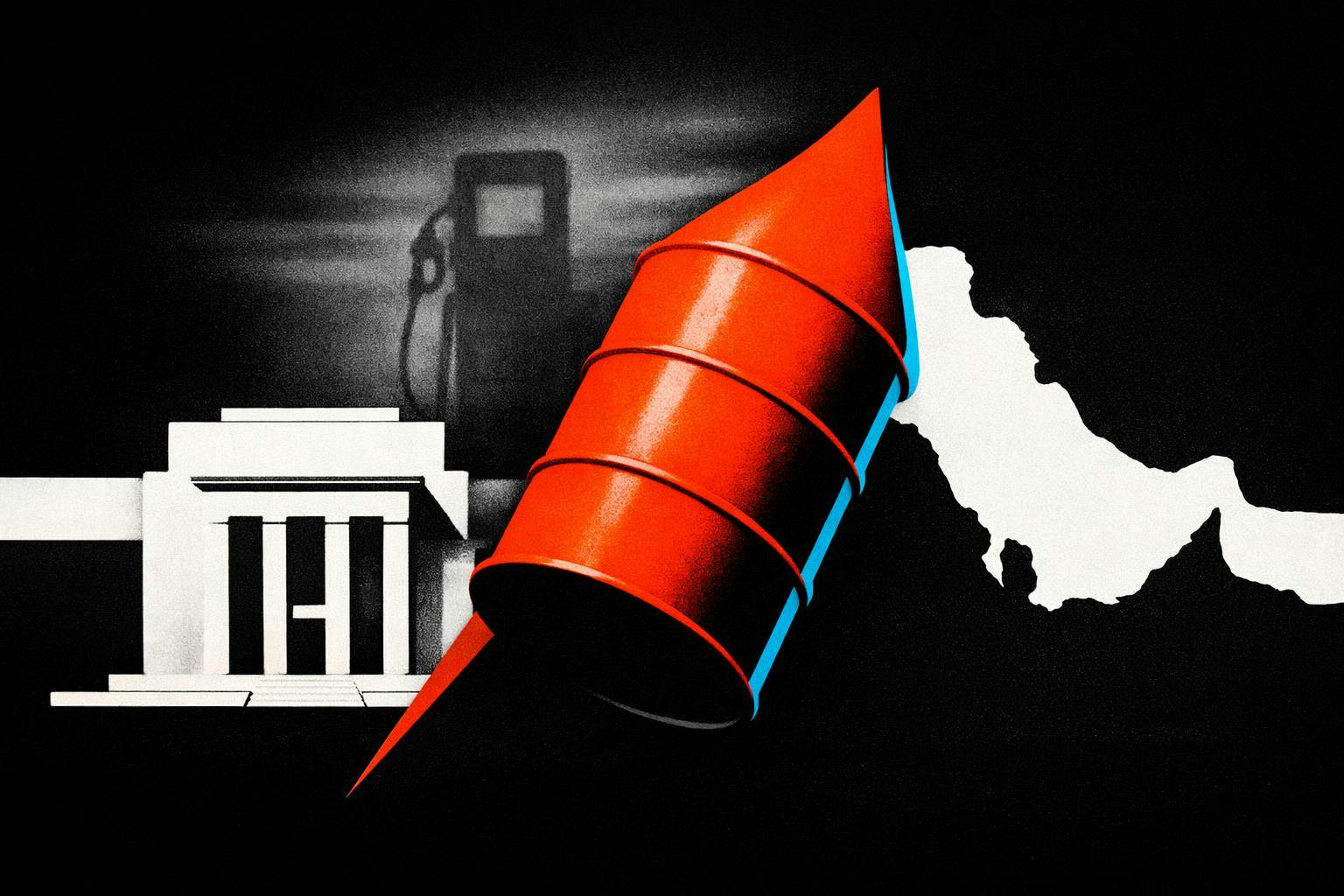
When investors analyze the energy prices and inflation outlook, they often overlook how quickly crude prices translate into headline CPI. In the current economic cycle, oil is not just a commodity; it is a policy disruptor. For every sustained $10 increase in the price of a barrel, we typically see an immediate upward pressure on consumer prices by about 10 to 20 basis points. This correlation makes it nearly impossible for the central bank to justify easing monetary policy when energy costs are trending upward.
The role of the Geopolitical risk premium cannot be understated. Tensions in energy-producing regions create a floor for Brent crude futures, preventing the natural deflation that would otherwise occur as the global economy slows. This acts as a form of stealth tightening. Even without Jerome Powell raising the federal funds rate further, high energy costs drain disposable income from consumers and increase operational costs for businesses, effectively doing the work of a rate hike but without the benefit of cooling the underlying inflation components.
In June 2024, the Federal Reserve's projections shifted the year-end core inflation forecast upward to 2.8% from a previous estimate of 2.6%, citing persistent inflationary pressures. This adjustment underscores why the Fed rate cut outlook remains so fragile. If a breakthrough occurs in Middle East negotiations, the positive impact of ceasefire news on energy stock prices might be offset by a broader market rally as the risk of energy-driven inflation recedes. However, until such a shift occurs, the central bank is unlikely to pivot.
Sectoral Bifurcation: Winners and Losers in an Energy Shock
The monetary policy impact on stock portfolios is rarely uniform. Instead, we see a distinct sectoral bifurcation. High energy prices create a sharp divide between companies that can pass on costs and those that are crushed by them. For investors, identifying leading indicators for 2026 fed rate cuts involves looking beyond the S&P 500 headline numbers to see which industries are being hollowed out by persistent fuel costs.
The primary losers in this environment are fuel-intensive industries. Historically, the best sectors to avoid during oil price shocks include airlines, long-haul trucking, and heavy manufacturing. These industries face immediate corporate margin compression as their input costs rise faster than they can adjust ticket prices or freight rates. Similarly, consumer discretionary spending tends to contract when gasoline prices at the pump rise, as households prioritize essentials over luxury goods and travel.
On the other side of the ledger, the energy sector often sees increased revenue and record-breaking free cash flow during these periods. This creates a defensive hedge for many portfolios. Furthermore, industries like defense and AI infrastructure have shown resilience, often decoupled from immediate energy fluctuations. However, the high degree of concentration in the modern market remains a risk; because a handful of companies represent such a large portion of market value, a sudden spike in oil that leads to a decline in tech valuations can drag down the entire index regardless of individual sector performance.
| Oil Price Benchmark | Fed Policy Response | Sector Performance Impact |
|---|---|---|
| Below $70 (Stable) | Facilitates pivot to cuts | Broad equity rally, consumer strength |
| $80 - $90 (Elevated) | Hawkish hold, delayed cuts | Selective energy gains, airline compression |
| Above $95 (Crisis) | Rate hikes back on table | Severe stagflation risk, defensive rotation |
Strategic Navigation: Portfolio Adjustments for 2026
When managing stock market risk 2026, the primary challenge is the interplay between commodity prices and bond yields. As oil prices push inflation expectations higher, the yield curve dynamics shift. Investors are currently watching for a projected 4.35% yield on the 10-year Treasury. If yields stay at these levels or climb higher, the present value of future corporate earnings drops, making high-growth stocks look significantly more expensive.
To mitigate this, adjusting stock portfolios for high energy prices requires a move toward quality and cash flow. In my view, protecting equity valuations from rising bond yields 2026 is best achieved by focusing on companies with low debt-to-equity ratios and high pricing power. These "all-weather" stocks are better positioned to survive a period of Quantitative tightening where liquidity is restricted and borrowing costs remain high.
Investors should also consider managing inflation risk in 2026 investment strategy by diversifying into real assets. While stocks are a traditional inflation hedge, the volatility introduced by energy shocks can make them unreliable in the short term. Balancing bond and stock allocations becomes critical; if the Fed determines that the economy can handle higher-for-longer rates because employment remains strong, the traditional 60/40 portfolio may face significant headwinds as both asset classes react negatively to a lack of rate cuts.
The Data-Dependent Path: Institutional Forecasts vs. The Dot Plot
The disconnect between institutional forecasts and the official Federal Reserve messaging provides a valuable signal for those positioning portfolios for a 2026 fed rate pause. While market sentiment often swings wildly based on single-day economic data releases, the underlying trend is one of caution. In its June 2024 Summary of Economic Projections, the U.S. Federal Reserve reduced its median forecast for interest rate cuts in 2024 to just one 25-basis-point reduction, down from the three cuts projected in March.
Meanwhile, external factors continue to tighten global supply. OPEC+ members agreed in June 2024 to extend voluntary oil production cuts of 2.2 million barrels per day through the end of September. This contributes to total output curbs of approximately 5.86 million barrels per day, or 5.7% of global demand. These supply-side constraints act as a permanent weight on the Fed rate cut outlook, as they are beyond the control of domestic monetary policy.
Financial institutions like J.P. Morgan and Goldman Sachs have frequently diverged from the official Dot plot forecasts. Some analysts argue for a more aggressive cutting cycle based on signs of a cooling labor market, while others suggest the Fed may not cut at all if Brent crude futures stay above $90. For the long-term investor, the lesson is clear: do not bet on a specific date for a pivot. Instead, focus on building a portfolio that can thrive in a range of interest rate environments, specifically one where real interest rates remain positive for longer than previously expected.
FAQ
When is the next Fed rate cut expected?
Timing for the next reduction is currently shifted toward late 2024 or early 2025, though many analysts revised their 2026 Fed rate cut outlook to reflect fewer total cuts than initially anticipated. Any move remains highly dependent on whether inflation reaches the 2% target and stay there.
What does a Fed rate cut mean for the economy?
A reduction in interest rates generally lowers the cost of borrowing for consumers and businesses. This typically stimulates economic activity, increases consumer spending on big-ticket items like homes and cars, and can lead to higher valuations in the stock market as the discount rate for future earnings drops.
How will Fed rate cuts impact the stock market?
Historically, rate cuts are a tailwind for equities, especially in growth-oriented sectors like technology. However, if a cut is made because the economy is entering a deep recession, the initial market reaction can be negative as investors focus on declining corporate earnings rather than lower borrowing costs.
What factors influence the Fed's decision to cut rates?
The Federal Reserve monitors a "dual mandate" of maximum employment and stable prices. Key indicators include core PCE inflation, the unemployment rate, wage growth, and external shocks such as fluctuations in energy prices and global supply chain stability.
Is inflation the main reason the Fed cuts interest rates?
Actually, high inflation is the main reason the Fed keeps rates high. The central bank typically cuts interest rates when inflation is under control and appearing to trend toward 2%, or when the labor market shows signs of significant distress that could lead to an economic contraction.