Quick Facts
- Market Trend: The global virtual office market is projected to reach $48B by 2034 as remote-first business models dominate.
- Compliance Pivot: Financial giants like Stripe and major commercial banks now programmatically flag CMRA addresses during onboarding.
- Non-Resident Focus: Wyoming and Delaware LLCs now face stricter physical site address requirements to satisfy updated FinCEN standards.
- Top Provider: 79% of visitors chose Northwest Registered Agent as their preferred service for balancing privacy with banking compliance in 2026.
- High Satisfaction: Northwest Registered Agent maintains a rating of 4.75 out of 5 from over 1,000 customers for its business address and privacy solutions.
- Core Cost: Founders should expect to budget between $49 and $199 per month for a KYC-compliant office suite that provides proof of occupancy.
Banking institutions and payment processors require a verifiable LLC physical address to comply with Customer Identification Program (CIP) and Anti-Money Laundering (AML) regulations. A registered agent address often identifies as a commercial mail receiving agency or mailbox service, which frequently triggers automatic declines during verification. To successfully pass KYC checks, founders generally need a commercial street address that indicates a real place of business rather than just a mail-forwarding hub.
The Banking Gap: Why Registered Agents Fail KYC
In my years tracking fintech infrastructure, the most common "onboarding wall" founders hit isn't their credit score or their business model; it’s their address. Modern banking systems are no longer just looking for a place to send mail. They are looking for a physical nexus. Most entrepreneurs start by using the address provided by their registered agent. While this works perfectly for state filing and legal service of process, it is a significant liability in the world of Anti-Money Laundering Protocols.
Federal regulators require banks to perform a Customer Identification Program check. This isn't just a formality. The underwriting software used by fintechs and traditional banks alike is synced with the United States Postal Service (USPS) database. Specifically, they check if an address is flagged as a Commercial Mail Receiving Agency (CMRA). If your LLC physical address is tagged as a CMRA—common for basic mailbox services and low-tier registered agents—the system may automatically trigger a rejection or a manual review request.
The gap exists because legal nexus (where you are registered) and physical nexus (where you operate) are treated differently under FinCEN Regulations. A registered agent provides the former. Banking compliance requires the latter. Using a registered agent address for LLC banking compliance is a gamble that often leads to frozen accounts or declined applications because the address lacks a unique suite number or a verifiable physical office infrastructure.
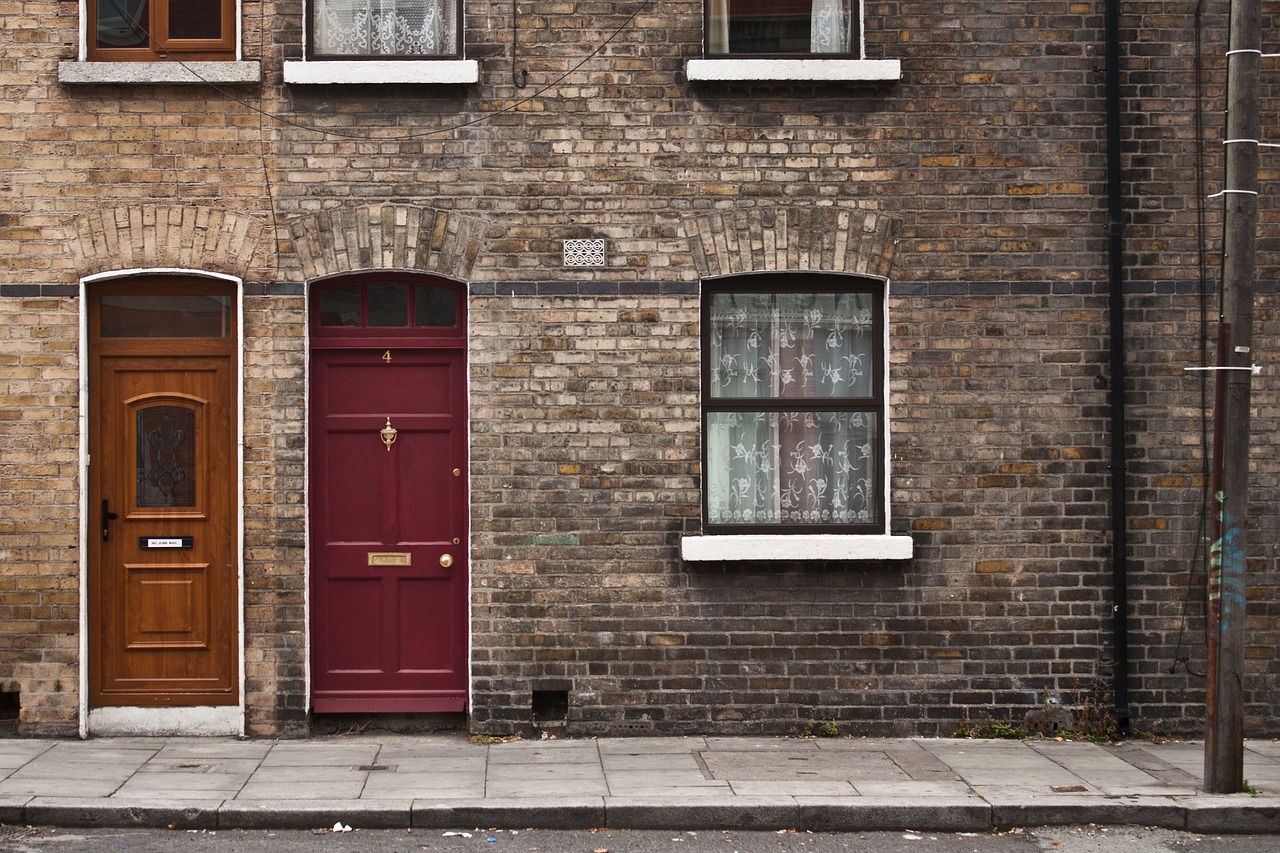
Address Hierarchy: Home vs. Virtual vs. Physical Office
When selecting your LLC physical address, you essentially have three tiers of operation. The choice you make impacts everything from your personal privacy to your ability to secure a merchant account.
-
The Residential Route: Using a home address for an LLC registration is legally allowed in most states but creates significant privacy risks. By doing so, you make your residential location part of the public record, accessible to anyone with an internet connection. On a practical level, many landlords and HOAs have zoning restrictions against running a business from home. From a banking perspective, a leading discussion on the usage of home addresses reached high engagement with 22 upvotes and 44 comments, highlighting the split between those seeking low costs and those fearing Identity Theft Protection issues. Furthermore, modern financial underwriting systems increasingly flag residential addresses as high-risk for certain commercial activities.
-
The Virtual Office: This is the sweet spot for the 2026 entrepreneur. However, not all virtual offices are created equal. A digital mailbox service is just a glorified PO Box. A professional office suite, conversely, provides a real commercial street address that includes a unique suite number. This is the difference between being flagged as a CMRA and being recognized as a legitimate business tenant.
-
The Traditional Physical Office: This remains the gold standard for banking but is cost-prohibitive for many digital startups. Unless your business requires a retail footprint or local staff, the overhead of a multi-year lease is an unnecessary friction in the growth stage.
| Address Type | Bank Friendly | Professional Credibility | Privacy Protection | Monthly Cost |
|---|---|---|---|---|
| Home Address | Moderate/Low | Low | None | $0 |
| PO Box | Rejected | None | High | $10 - $30 |
| Registered Agent | Low (CMRA Flag) | Moderate | High | $10 - $25 |
| Virtual Office | High | High | High | $49 - $199 |
| Physical Office | Highest | Highest | Moderate | $1,000+ |
For the majority of founders, choosing between virtual office and physical business address comes down to the quality of the virtual provider. Services like Northwest Registered Agent have dominated the market because they bridge this gap, offering more than just a relay for mail but a foundation for business identity.

State-Specific Hazards: Wyoming, Florida, and New York
Geography plays a massive role in how your address is scrutinized. If you are a non-resident owner, your choice of state and address type can determine whether you can even open a U.S. bank account.
- Wyoming: This is a favorite for international founders. However, a Wyoming LLC physical address for non-resident bank accounts must be precise. Because there is no state income tax, federal regulators watch Wyoming filings closely. Standard virtual mailboxes are rarely enough; banks often demand a Wyoming virtual office requirements for business banking that include a localized phone number and a physical site address with real office utility history.
- Florida: Florida has become increasingly strict, with specific precedents essentially banning a PO Box for official business filings. If you use a CMRA address in Florida, you may find that local business licenses and bank accounts are nearly impossible to secure without a secondary proof of occupancy.
- New York: The publication requirements and in-state office mandates make New York a complex beast. Banks here frequently request a physical business address for banking verification that can be cross-referenced with local commercial property tax records.
Editor's Note: If you are operating as a non-resident, your "office" needs to be more than a software dashboard. Fintechs now use geolocation and IP analysis alongside address verification to ensure the business has a legitimate footprint where it claims to be.

2026 KYC Verification Checklist: Preparing Your Proof of Address
Passing a Customer Identification Program check is a technical process. If you are using a virtual business address with real office space for KYC, you need to have your documentation ready before you hit the "Apply" button on Stripe or Mercury.
Your Compliance Toolkit:
- USPS Form 1583: This is a federal requirement that authorizes your address provider to receive mail on your behalf. It must be notarized. Without a correctly filed 1583, your address cannot be legally used for business verification.
- Lease Agreement: Many premium virtual office providers will issue a sub-lease or service agreement. Banks often ask for this to prove that you have a "right to occupy" the commercial street address.
- Utility Bill/Secondary Proof: This is the hardest hurdle. Some banks now request a utility bill in the company name at that address. Some virtual office providers offer "utility as a service" or phone bills that satisfy this specific KYC requirement.
- Stripe & Merchant Verification: For LLC address for Stripe and merchant account verification, ensure your address matches your EIN confirmation letter (CP 575) from the IRS. Discrepancies between the IRS and your banking application are the number one cause of manual freezes.
The goal is to provide a "path of least resistance" for the bank's underwriting software. When the system sees a unique suite number at a known commercial building, your risk score drops, and your approval odds skyrocket.

Dealing with Digital Gatekeepers
Fintech platforms like Stripe, Airwallex, and Brex use AI-driven systems to instantly verify the legitimacy of your LLC physical address. These systems don't just check if the address exists; they analyze the "type" of property. If the database identifies the location as a "Pack and Ship" store, your application may be suspended before a human ever looks at it.
To stay compliant, treat your business address as a core part of your financial infrastructure, not just a line on a form. The shift toward transparency in corporate ownership—marked by the Corporate Transparency Act and new FinCEN oversight—means that the "empty shell" LLC is becoming harder to bank. A verifiable, professional address is your first line of defense against being labeled as a high-risk entity.

FAQ
Do I need a physical address to open a business bank account?
Yes. Federal regulations under the USA PATRIOT Act require banks to maintain a physical address for every business customer. This is part of the mandatory Customer Identification Program designed to prevent money laundering. While you can receive mail elsewhere, the bank must have a record of a verifiable physical location where the business exists or where its principals can be located.
Can I use a PO Box as my LLC physical address?
No. Banks and the IRS generally do not accept a PO Box as a principal place of business address. While a PO Box can be used as a mailing address, it does not satisfy the requirements for a physical street address during the KYC process. Applications using only a PO Box are typically rejected automatically by banking software.
Is a home address allowed for an LLC physical address?
Legally, yes. Most states allow you to use your residential address for LLC formation. However, many banks flag residential addresses as high-risk, especially for certain industries. Additionally, using a home address compromises your personal privacy, as it becomes part of the permanent public record, and may violate local residential zoning laws.
Can I use my registered agent's address as my business physical address?
It depends on the provider. A standard registered agent address is often flagged as a CMRA in banking databases, leading to account rejection. However, if your registered agent provides a comprehensive virtual office with a unique suite number and a commercial lease agreement, it may pass banking verification. General "mailbox" registered agent services are usually insufficient for high-tier banking needs.
Can I use a virtual office address for my LLC?
Yes, provided it is a "true" virtual office and not just a digital mailbox. A compliant virtual office provides a physical commercial street address and unique suite number that does not trigger CMRA flags. This is the preferred solution for remote founders and international LLC owners who need to meet U.S. banking and KYC standards without maintaining a full-time physical staff.