Quick Facts
- Market Context: The S&P/ASX 200 experienced its weakest November performance since 2014, signaling a major shift in investor sentiment.
- Valuation Drivers: A correction was triggered by a high forward P/E ratio of 18.1x, which many institutional players viewed as a valuation premium.
- Technical Floor: Market analysts have identified 8383 as a critical support level and high-conviction entry point for the next cycle.
- Sector Performance: While the banking sector struggled, the australian resource sector remains a bright spot due to Chinese commodity demand.
- Monetary Policy: The Reserve Bank of Australia maintains a restrictive monetary policy stance, with rate cuts unlikely before mid-2026.
- Target Outlook: If support holds, the technical bull target for the index remains between 9300 and 9500 for late 2026.
The current asx 200 outlook is defined by its deepest November correction in a decade, driven by sticky inflation and shifting RBA expectations. While the index recently dipped from 9115 to 8383, investors are now looking for recovery patterns and institutional entry points. Understanding the valuation gap and sector-specific resilience is key to navigating this volatile landscape for the remainder of 2026.
Historical Severity: Analyzing the Worst November Slump Since 2014
In November 2025, the S&P/ASX 200 index recorded a 3% monthly decline, marking its weakest performance for the month of November since 2014. This was not a localized tremor but part of a broader market correction that saw the index retreat from its peak of 9115. Within just four weeks, a broad market selloff wiped approximately $220 billion from the total market capitalization of the Australian stock market.
From my perspective as an editor, this slump represents a necessary "breather" for a market that had become overextended. The technical retreat to the 8383 support level was largely a reaction to a high forward P/E ratio that left little room for error. When compared to the historical benchmark of 2014, the current dip highlights how sensitive the domestic market remains to the RBA's rhetoric. Institutional capital growth strategies are currently prioritizing capital preservation over aggressive expansion as they wait for the dust to settle on these refreshed valuations.
Sector Rotation Strategy: Why Tech and Banks are Slumping
The November volatility was not distributed evenly. The Australian banking sector was a primary driver of the slump, with the banking sub-index falling by 7.4%, its largest monthly drop since June 2022. This rout in the big four banks reflects investor anxiety over the impact of rba rate hike probability on asx bank stocks 2026, as higher rates eventually begin to pressure loan growth and net interest margins.
To succeed in this climate, a refined asx 200 sector rotation strategy is essential. We are seeing a distinct pivot toward defensive assets and exporters. While domestically focused stocks suffer, the materials sector is finding support from resilient Chinese commodity demand and steady export volumes. Furthermore, I am observing buying opportunities in asx tech stocks after november correction for those with a long-term horizon; the recent 11.3% dip in the tech sub-index has finally brought some high-quality growth names back to more reasonable valuation levels.
| Sector | November Performance | Investment Thesis |
|---|---|---|
| Banks / Financials | -7.4% Decline | Impacted by restrictive RBA policy and fading rate-cut hopes. |
| Materials / Resources | Resilient Growth | Supported by steady export volumes and Chinese demand. |
| Technology | -11.3% Correction | Transitioning from overvalued growth to selective value entry. |
| Real Estate (REITs) | Moderate Pressure | Sensitive to bond yields and interest rate swaps. |
Learning how to adjust asx 200 portfolio for sticky inflation means moving away from rate-sensitive domestic retailers and toward commodity-linked exporters. For those focused on security, asx 200 income investing during interest rate uncertainty remains viable through high-yield resource plays rather than traditional banking dividends.
Macro Roadblocks: The RBA Impact and Inflation Outlook
The central challenge to the asx 200 outlook remains the persistence of trimmed mean inflation. Recent data suggests that price pressures in the housing and service sectors are "stickier" than previously modeled, leading to a more hawkish stance from the Reserve Bank of Australia. Market stability now depends on inflation easing toward the RBA target band, but interest rate swaps currently reflect a higher probability of rates remaining restrictive through mid-2026.
This "higher-for-longer" reality has caused many investors to re-evaluate their portfolios. We are seeing a divergence in monetary policy stance compared to neighbors like New Zealand, which may keep the Australian dollar relatively strong but will continue to weigh on the forward P/E ratio for equities. Bond yields have remained elevated, further drawing capital away from high-multiple growth stocks and into fixed-income or cash-equivalent defensive assets.
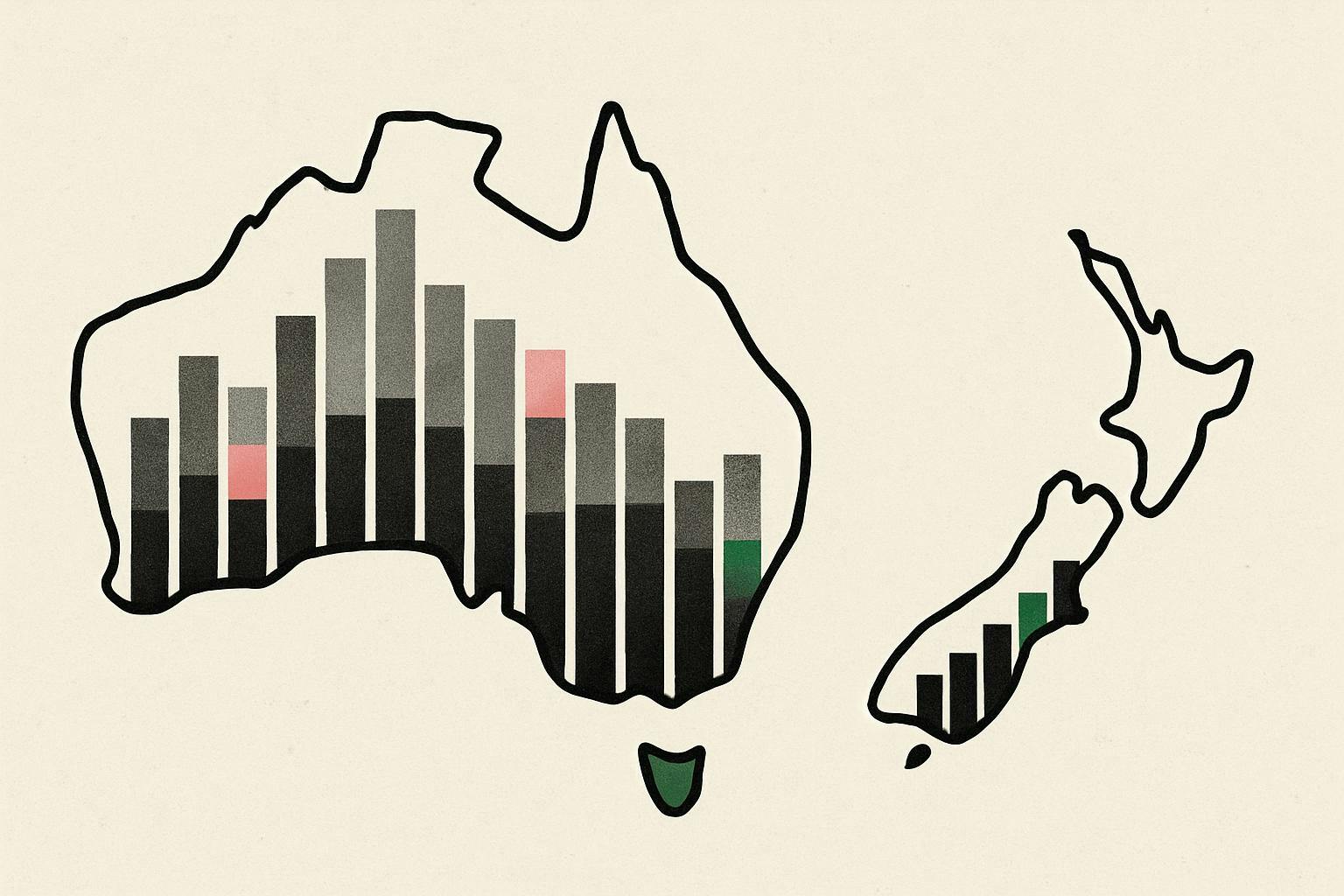
Recovery Roadmap: Technical Targets for H2 2026
Despite the recent slump, the australian resource sector outlook remains a cornerstone of potential recovery. Resource stocks often act as a proxy for global industrial health, and as long as Chinese commodity demand holds steady, the Materials sub-index could lead the broader market back toward previous highs. For commodity linked investors, the focus should remain on iron ore and copper exporters who benefit from a resilient global supply chain.
As we look toward the second half of 2026, the technical roadmap is clear. The 8383 level must hold as a floor to prevent further institutional liquidation. If current macro roadblocks begin to clear—specifically if pruned mean inflation peaks in early 2026—the market will likely begin to price in a recovery toward the bull target of 9300 to 9500.
Indicator Checklist: External Signals to Watch
- Chinese PMI Data: Essential for the australian resource sector outlook.
- Trimmed Mean Inflation: The RBA's preferred metric for policy shifts.
- Interest Rate Swaps: Watch for a shift in the 43% hike probability.
- Iron Ore Futures: The primary driver for Materials sector earnings.
Navigating this environment requires a balance of patience and precision. By rebalancing into income-generating resource stocks and maintaining a disciplined approach to valuations, investors can position themselves for the eventual mean reversion that typically follows such a decade-defining November slump.
FAQ
What is the outlook for the ASX 200 for the rest of the year?
The asx 200 outlook is currently cautious but stable after finding technical support at 8383. Investors are focusing on sector rotation and high-quality resource stocks to buffer against volatility while waiting for the RBA to signal a move away from its restrictive monetary policy stance.
Is the ASX 200 predicted to rise or fall in the coming months?
While the immediate sentiment is hindered by a high forward P/E ratio, a recovery toward 9300 is predicted for the mid-to-late 2026 period. In the short term, the index is expected to track sideways as it digests sticky inflation data and adjusts to higher-for-longer interest rates.
What factors are currently influencing the ASX 200 performance?
Key factors include the rba monetary policy impact on stocks, the recent correction in the banking sector, and global commodity demand. Specifically, trimmed mean inflation levels and interest rate swaps are the primary macro indicators driving institutional selloffs or buying rounds.
How do interest rate changes affect the ASX 200 outlook?
Interest rate changes directly impact equity valuations by altering the discount rate used for future earnings. Current restrictive policies have squeezed profit margins for the banking sector and lowered the valuation premium for tech stocks, though they have kept the AUD strong, benefiting some resource exporters.
Which sectors are expected to outperform in the ASX 200?
The resource and materials sectors are expected to outperform due to resilient export volumes and global commodity cycles. Conversely, technology and banks may face continued headwinds until there is clearer evidence of an inflation slowdown and a definitive end to the RBA's tightening cycle.