Quick Facts
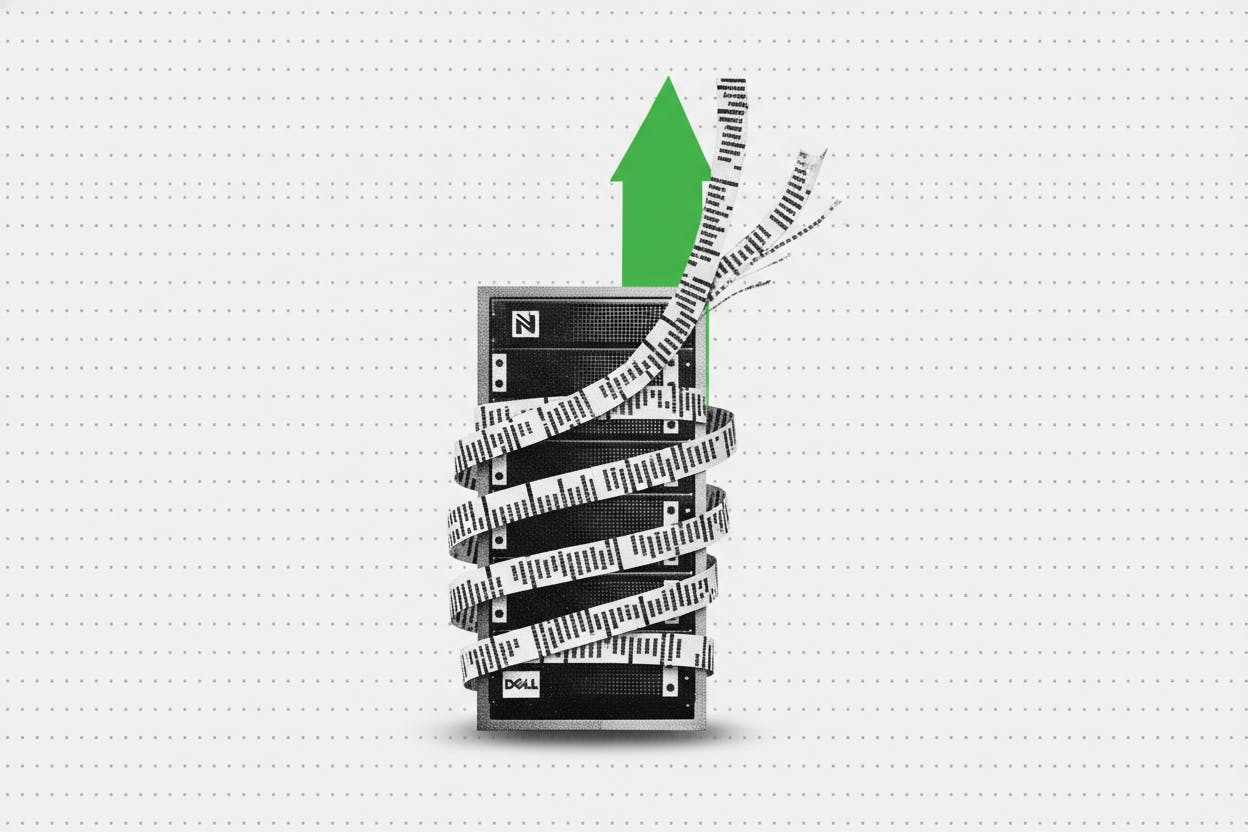
- Market Engine: AI-related gains accounted for 80% of 2025 S&P 500 growth.
- Peak Valuation: Nvidia reached a record $5 trillion market cap in October 2025.
- The Crash: A $5 trillion global wipeout occurred over 48 hours on Liberation Day in April 2025.
- Top Performer: MSCI Emerging Markets Index provided a 34.3% return compared to 17.9% for the S&P 500.
- Alpha Source: AI technical patterns like Cup-and-Handle achieved a 76% success rate for algorithmic traders.
- Strategic Shift: Corporate AI expenditure evolved from chip design to heavy power grid infrastructure.
The volatile tech rally of 2025 redefined modern finance. This AI investment lessons guide breaks down how portfolios survived the $5 trillion wipeout and where the next opportunities lie. A key lesson from the 2025 tech rally is that while artificial intelligence remains a powerful growth engine, extreme market concentration in a few leaders creates significant risk. The year showed that even top-tier stocks like Nvidia can experience massive volatility and bubble scares despite reaching record valuations. Successful investors used real-time algorithmic patterns to navigate these swings, emphasizing the importance of precise entry and exit levels when trading high-growth technology sectors.
The Anatomy of a $5 Trillion Wipeout: Tariff Friction vs. AI Growth
Reflecting on the 2025 market volatility review, the narrative of the year was a tug-of-war between unprecedented technological advancement and sudden geopolitical friction. The defining moment of this tension occurred in April, a period now referred to by institutional desks as Liberation Day. Within a 48-hour window, $5 trillion in global market value evaporated. This black swan event was triggered by the announcement of a 104% tariff on certain high-tech components, sending shockwaves through the semiconductor industry and the Magnificent Seven.
During this tariff-induced volatility of 2025, traditional safe havens like the US dollar proved less reliable, leading investors to aggressively hedge currency risks. For years, the dollar was the default bunker during a crisis. However, as Treasury yields fluctuated wildly in response to the trade friction, the correlation between the greenback and risk-off sentiment decoupled. Wealth managers were forced to seek alternative hedging tariff risk strategies that didn't rely on the domestic currency alone.
This period also provided vital lessons from the 2025 Nvidia 5 trillion valuation peak. When a single company carries the weight of an entire index, even minor supply chain disruptions can feel like a systemic collapse. Investors who focused solely on peak valuations often ignored the Jevons Paradox.
Expert Insight: The Jevons Paradox in 2025 In 2025, markets witnessed the classic Jevons Paradox. This occurs when an increase in efficiency (in this case, AI chip performance) actually increases total demand for a resource rather than decreasing it. This paradox explains why the massive $405 billion in capital expenditure didn't cool the market but rather fueled an insatiable demand for power and raw materials.
Protecting investment portfolios from tariff-induced volatility required a shift from reactive selling to proactive hedging. This meant moving away from high-beta software companies that lacked tangible infrastructure support and rotating into sectors that provide the physical backbone for AI, such as electrical grid upgrades and cooling systems. The growth wasn't gone; it had simply moved further down the value chain.
Global Divergence: Why Emerging Markets Won in 2025
Perhaps the most significant of the AI investment lessons from 2025 was the power of global divergence. While the S&P 500 recorded a 17.9% gain with dividends, it was overshadowed by the MSCI Emerging Markets Index. Diversification into undervalued emerging markets, specifically those outperforming traditional European leaders, became a vital strategy for protecting portfolios.
Markets like South Korea and Poland emerged as winners because they stood at the intersection of AI hardware manufacturing and lower entry prices. By mid-year, the P/E ratio for the US market sat at an elevated 22.1x, while emerging markets offered a more balanced 13.7x. This valuation gap created a risk-on appetite for institutional capital looking for emerging market stock opportunities that were not yet saturated by the AI hype cycle.
| Metric | US Market (S&P 500) | Emerging Markets (MSCI EM) |
|---|---|---|
| 2025 Total Return | 17.9% | 34.3% |
| Average P/E Ratio | 22.1x | 13.7x |
| AI Value Concentration | Approximately 30% of Index | Less than 12% |
| Primary Risk Factor | Market Concentration | Geopolitical Friction |
Identifying undervalued emerging market stocks in 2026 requires looking for countries that have successfully pivoted from commodity-heavy economies to tech-heavy export hubs. This geographic asset allocation serves as a necessary buffer against US-centric trade policies. By spreading capital into markets with resilience against fluctuating Treasury yields, investors found they could capture growth without the extreme drawdown risks seen in the Nasdaq's more volatile sessions.
Algorithmic Armor: Using Technical Patterns for 2026 Resilience
In the wake of Liberation Day, it became clear that human intuition was no longer sufficient to navigate the 5-minute modeling cycles that now dominate high-frequency trading. Post-2025 portfolio rebalancing focuses on balancing AI growth stocks with defensive assets and undervalued emerging market opportunities. To do this effectively, institutional traders leaned heavily on algorithmic trading and real-time data analytics.
Using technical indicators such as ascending triangles and rising valley patterns helped identify stable recovery phases amid ongoing volatility. One of the most successful setups during the recovery from the April wipeout was the Cup-and-Handle formation. When combined with real-time data analytics, these patterns offered a 76% success rate in predicting the next leg of the rally.
Applying AI chart patterns to volatile stocks allowed sophisticated traders to ignore the noise of social media sentiment and focus on liquidity flows. This tactical approach was crucial for trading high-probability setups during market recovery phases. Instead of being paralyzed by the fear of a bubble, these investors used the very technology that was disrupting the market to trade it more effectively.
Expert Insight: The 76% Success Rate For those rebalancing portfolios after an AI-driven market bubble scare, technical patterns offered a lighthouse in the storm. Algorithmic agents successfully identified technical indicators that suggested the market was oversold in May 2025, allowing for a sector rotation into defensive bond strategies before the next leg of the Nvidia-led rally.
Investors are now encouraged to look beyond the semiconductor industry. Integrating sector rotation strategies that account for energy consumption and industrial manufacturing has become a prerequisite for 2026. The lesson is clear: growth is no longer a tide that lifts all boats; it is a laser that rewards precision and penalizes concentration.
FAQ
What are the key lessons from early AI investing?
The primary lesson is that while AI can drive massive growth, valuation still matters. In 2025, the market learned that high growth does not protect a stock from a 30% drawdown if the initial P/E ratio is disconnected from tangible infrastructure spend. Diversification across the AI value chain—rather than just the chip designers—is essential.
What are the biggest risks when investing in AI?
The biggest risks include extreme market concentration and geopolitical sensitivity. Because so much of the AI infrastructure depends on complex global supply chains, a single tariff or trade restriction can erase billions in market cap overnight. Additionally, the high energy cost of AI creates a bottleneck that can stall growth for companies not prepared for infrastructure constraints.
How do I identify the best AI companies to invest in?
Look for companies moving from the speculative phase to the implementation phase. In 2026, the best opportunities are likely in companies providing power solution infrastructure, cooling technologies, and localized data centers. Use technical indicators like the Cup-and-Handle to time your entry during periods of sector rotation.
What is the difference between investing in AI hardware and software?
AI hardware (chips, servers, power grids) is the current engine of the market, characterized by massive capital expenditure. AI software focuses on the application layer, which has higher margins but currently faces more competition and slower monetization cycles. In 2025, hardware drove the majority of the gains while software struggled with saturation.
Which sectors are most impacted by AI growth?
Beyond the technology sector, the energy and utilities sectors have seen the most significant impact. AI data centers require immense amounts of electricity, leading to a resurgence in nuclear power and renewable energy investments. The manufacturing and logistics sectors are also being transformed as AI-driven automation improves operational efficiency.
Are AI ETFs a safe way to invest in the technology?
AI ETFs offer diversification, which mitigates individual stock risk, but they are still subject to sector-wide volatility. Many of these ETFs are heavily weighted toward the same five or six mega-cap companies. For a safer approach, look for ETFs that include emerging market exposure or those focused on the broader AI infrastructure rather than just top-tier software providers.