Quick Facts
- 2026 Target: The OECD revised the US headline inflation projection to 4.2 percent, significantly up from the previous 3.0 percent baseline.
- Economic Slowdown: Global GDP growth is forecast to decelerate to 2.9% by 2026, creating a stagflationary shadow over equity markets.
- Energy Threshold: If crude oil prices reach $135/barrel, analysts expect severe downward pressure on consumer spending and a shift in market momentum.
- Yield Trigger: The 10-year Treasury yield hitting a 4.5% floor is identified as the primary catalyst for increased equity market volatility.
- Sector Rotation: Strategy is shifting from high-valuation tech toward commodity-linked equities and dividend-paying stocks.
- Asset Hedge: Short-term Treasury bills and inflation-protected securities are preferred over long-duration bonds in this climate.
The 4.2% inflation market impact in 2026 suggests a survival path through value-oriented sector rotation and energy price shock portfolio hedging. While high inflation pressures valuations, robust corporate earnings and AI-driven growth provide a resilient floor for the S&P 500.
The OECD Warning: Why 4.2% is the New Baseline
For much of late 2025, the narrative in financial circles was one of "immaculate disinflation"—the idea that inflation would glide back to 2.0 percent without a major economic contraction. However, the latest OECD Economic Outlook has shattered that complacency. The organization recently projected that U.S. headline inflation would reach 4.2% in 2026, marking the highest rate among G7 economies. This revision stems from more than just consumer demand; it is a structural shift driven by a stubborn wage-price spiral and persistent energy volatility.
The implications for protecting retirement savings from 4.2 percent inflation are becoming a central focus for portfolio managers. When inflation settles at such a high level, the purchasing power of fixed dividends and standard savings accounts erodes at a pace that traditional 60/40 portfolios are ill-equipped to handle. The OECD also noted that average inflation across G20 nations was revised upward to 4.0%, suggesting that the inflationary pressure is a global phenomenon that cannot be outrun by simply diversifying into European or Asian equities.
As we look toward the 2026 horizon, the market is forced to move away from the hope of rapid rate cuts. Instead, the central bank hawkishness is likely to remain a permanent fixture. The OECD warned that a prolonged period of high energy prices could lead to a significant repricing in financial markets, potentially erasing the momentum gained during the lower-interest-rate environment of years past.
Energy Shocks and the Strait of Hormuz Bottleneck
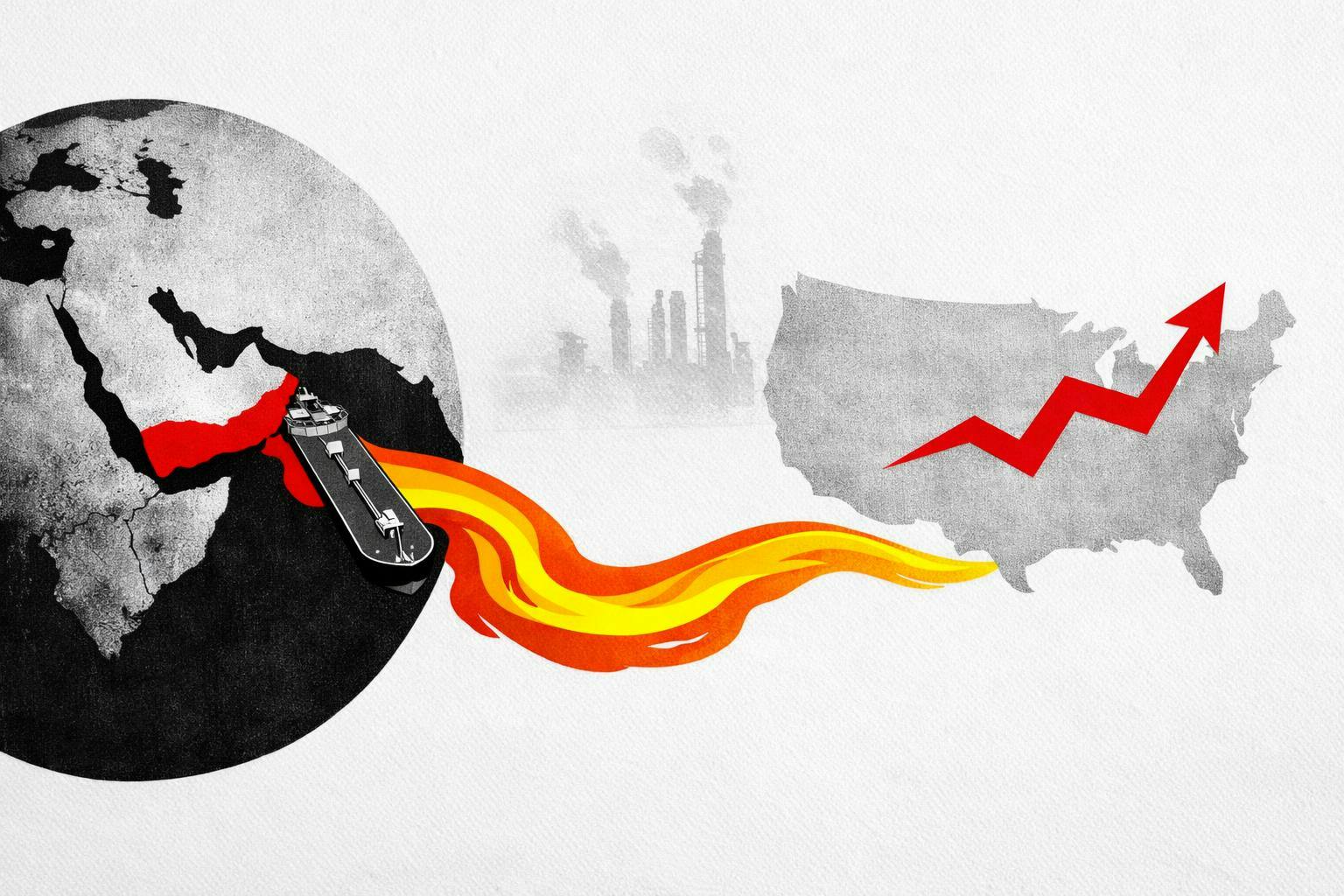
The primary catalyst for this updated inflation market impact is the state of global energy security. Geopolitics in the Middle East have moved beyond local skirmishes to systemic threats against global trade routes. Specifically, potential disruptions in the Strait of Hormuz—the primary artery for the world’s oil supply—have placed a floor under crude prices.
Market strategists are modeling scenarios for the best sectors to buy when energy prices hit 135 per barrel, a level many consider a breaking point for global transport and logistics costs. In such a scenario, the traditional consumer discretionary and industrial sectors face massive margin compression. To counter this, energy price shock portfolio hedging 101 dictates an overweight position in integrated oil majors and commodity-linked equities. These assets do not just survive high energy costs; they thrive on them, providing a natural offset to the rising costs of living and production.
Furthermore, investors are prioritizing dividend stocks to buy during energy driven inflation. Companies in the energy and materials sectors often have high free-cash-flow yields during periods of elevated commodity prices. By focusing on these sectors, investors can secure a steady income stream that is more likely to keep pace with rising consumer prices than the static yields of traditional high-growth companies.
Growth Stocks vs. Value: The 2026 Sector Rotation
The most visible shift in the market today is the struggle of high-valuation growth companies. In a low-inflation world, a company promising high earnings ten years from now is highly attractive. However, a growth stock investment strategy inflation environment changes the math significantly. As inflation and interest rates rise, the discount rate applied to those future earnings increases, making a dollar earned in 2036 worth much less in today’s terms.
We are seeing a strategic rebalancing where investors are increasingly investing in value stocks during high inflation 2026. Value stocks, which typically trade at lower multiples of current earnings and are often concentrated in sectors like energy, financial services, and industrials, are more resilient when money is "expensive."
| Metric | Growth Equities (Tech/SaaS) | Value Equities (Energy/Financials) |
|---|---|---|
| Duration Risk | High (sensitive to rate hikes) | Low (closer to current cash flow) |
| Margin Pressure | Moderate to High | Low (ability to pass on costs) |
| Dividend Yield | Typically low/zero | Typically higher (3-5%) |
| Pricing Power | Variable | Strong in commodities/essentials |
The current tech concentration in the S&P 500—currently at its highest levels since the 2000 bubble—presents a unique risk. The impact of 4.2 percent inflation on S&P 500 performance could be dramatic if a mass exodus from tech occurs. While AI advancements provide a strong earnings story, the "multiple compression" seen during the high-interest-rate periods of the 1970s serves as a cautionary tale. Broad diversification across sectors with strong pricing power is no longer optional; it is the core of a modern asset allocation rebalancing plan.
Fixed Income Fragility: Navigating the 4.5% Yield Wall
Perhaps the most dangerous area for the unprepared investor is the bond market. For decades, bonds were the "safe" portion of a portfolio. But in 2026, the reality of long term bond risks higher for longer rates is impossible to ignore. When inflation persists at 4.2 percent, the yield on a 10-year Treasury must rise significantly to provide investors with a positive real return.
Strategists have identified 4.5% as the critical threshold for the 10-year Treasury yield. Crossing this level often triggers a sell-off in equities as the "risk-free" rate becomes high enough to pull capital away from the stock market. To navigate this, many are adopting a short term treasury vs long term bond strategy 2026. By keeping bond durations short—focusing on maturities of two years or less—investors can avoid the massive price drops that hit long-term bonds when yields rise.
Furthermore, how to adjust portfolio for higher for longer fed rates involves moving beyond traditional government debt. Inflation-protected securities (TIPS) and floating-rate notes are becoming essential tools to mitigate duration risk. The goal is to build a "yield wall" that protects against currency devaluation without exposing the principal to the volatility of a shifting interest rate landscape.
FAQ
How does inflation affect the stock market?
Inflation affects the stock market by increasing corporate input costs, which can squeeze profit margins. More importantly, it leads central banks to raise interest rate levels. Higher interest rates increase the discount rate for future cash flows, which typically results in lower price-to-earnings multiples for stocks, particularly high-growth tech companies.
Which sectors perform best during high inflation?
Historically, the energy, materials, and financial sectors tend to outperform. Energy and materials companies benefit from the rising prices of the commodities they sell, while financial institutions can benefit from wider interest rate margins. These are often categorized as value stocks that have strong pricing power to pass on costs to consumers.
How does rising inflation impact bond prices?
There is an inverse relationship between inflation and bond prices. As inflation rises, the fixed interest payments of a bond become less valuable in real terms. To compensate, market yields rise, which causes the market price of existing bonds to fall. Long-term bonds are significantly more sensitive to these changes than short-term bonds.
What are the best assets to hold when inflation is high?
The best assets typically include "real" assets like commodities, energy stocks, and real estate, which often appreciate in step with inflation. Additionally, inflation-protected government bonds and short-term credit instruments are preferred over traditional long-term fixed-rate debt to protect the principal from rising interest rates.
Why do growth stocks tend to fall when inflation rises?
Growth stocks are valued based on their potential for future earnings. When inflation rises and interest rates go up, the present value of those future earnings decreases sharply. Because growth companies often have valuations that rely on profits many years away, they are more susceptible to the "duration risk" of rising rates than companies earning profits today.
Building a Resilient 2026 Strategy
Surviving a 4.2 percent inflation regime is not about timing the market to avoid every dip; it is about ensuring your portfolio is correctly aligned with the macroeconomics of a higher-cost world. The OECD warning serves as a clear signal that the era of "easy money" and predictable 2.0 percent inflation is over.
As we move through 2026, the successful investor will be one who prioritizes energy security, looks for value in neglected sectors, and manages fixed-income duration with precision. While the OECD forecast global GDP growth would slow to 2.9%, opportunities remain for those who can pivot. Asset allocation rebalancing toward commodity-linked equities and short-term instruments will likely differentiate the survivors from those caught in the repricing storm. The stock market can survive 4.2 percent inflation, but the composition of the "winning" portfolio will look vastly different than it did a decade ago.