Quick Facts
- National Shortage: The U.S. faces a deficit of 4.03 million homes needed by 2025-2026 to keep up with household formation.
- Productivity Gap: Construction efficiency has declined significantly, falling nearly 50% since 1968, hampering new development.
- Target Demographic: Missing Middle households earning between 80-120% of Area Median Income (AMI) are the most underserved.
- Top Reform: Abolishing exclusive single-family zoning in favor of Small-Scale Multi-Unit Housing (SSMUH) is the most impactful policy change.
- Immediate Fix: Implementing 45-day shot-clock mandates for permit reviews can drastically reduce the housing inventory gap.
- Labor Crisis: The industry must hire 723,000 new workers annually to meet current and future residential demand.
The housing supply crisis has reached a tipping point in 2026, with a deficit exceeding 4 million homes. To solve this, we must shift from demand subsidies to aggressive supply-side interventions. By focusing on zoning reform for affordable housing, modernized building code updates for density, and scaled non-market housing investment, cities can finally bridge the affordability gap and restore stability to the market. Solving the housing supply crisis requires a multi-pronged approach: reforming zoning laws to allow for missing middle housing like townhomes, updating building codes to permit higher density designs like single-stairwell mid-rises, and increasing public investment in non-market housing to alleviate market demand.
Step 1: Zoning Reform for Affordable Housing
For decades, the foundation of the American neighborhood has been built on exclusionary zoning. By restricting the vast majority of residential land to detached single-family homes, municipalities have inadvertently created an artificial scarcity that fuels the housing supply crisis. To reverse this, we must end the era of single-family exclusivity and embrace land-use intensification. This means transitioning to Small-Scale Multi-Unit Housing (SSMUH) by right, allowing homeowners and developers to build duplexes, triplexes, and fourplexes on lots that were previously restricted to a single dwelling.
A critical component of this transition involves upzoning transit corridors for high density residential projects. When we combine Transit-Oriented Development (TOD) with zoning reform for affordable housing, we create a synergy that reduces car dependency while maximizing the number of units near employment hubs. Legislative examples are already surfacing; for instance, BC’s 2026 Bill 25 mandate requires municipalities to allow 4 to 6 unit complexes on standard residential lots. These zoning reform strategies for affordable housing development are not just about adding units; they are about correcting the market distortions that have made urban living unattainable for the average worker.
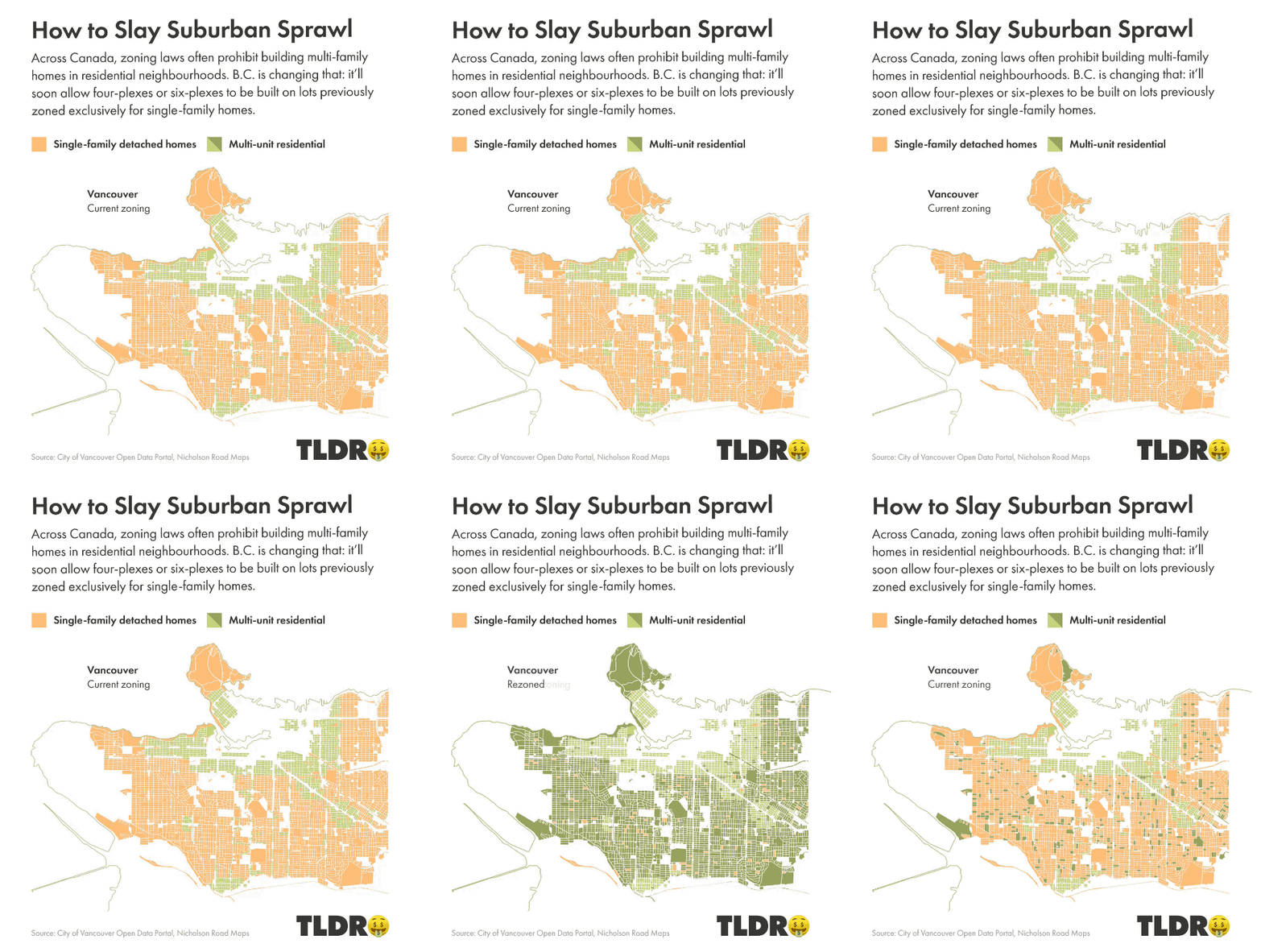
Effective zoning reform also requires moving away from Euclidean zoning—where uses are strictly separated—toward more flexible, performance-based standards. By allowing for urban infill in underutilized commercial zones and parking lots, we can unlock thousands of acres for residential use. This shift focuses on the shape and scale of buildings rather than just the number of families living inside them, helping to close the housing inventory gap through a more diverse range of housing types.
Step 2: Modernizing Building Codes for Urban Density
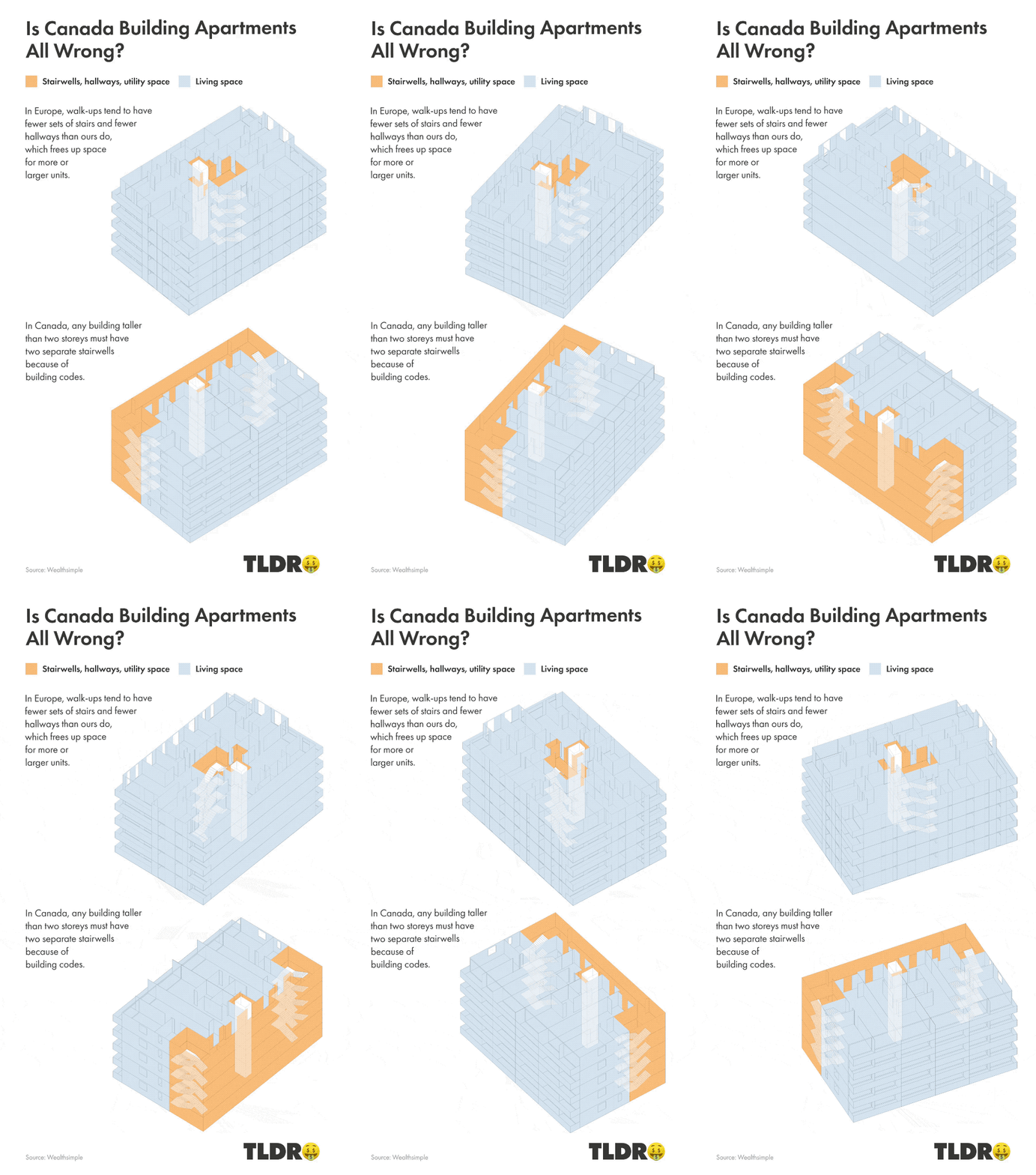
While zoning tells us where we can build, building codes dictate how we build. One of the most significant yet overlooked barriers to solving the housing supply crisis is the requirement for two stairwells in mid-rise apartment buildings. This regulation, often cited for fire safety, frequently leads to inefficient double-loaded corridors—long hallways with apartments on either side. These designs usually result in narrow, one-bedroom units that lack cross-ventilation and natural light.
By reforming building codes to increase family friendly apartment supply, we can permit single-stairwell mid-rises, or point access blocks. This architectural shift allows for more efficient floor plates, enabling developers to build larger, three-bedroom units that occupy the entire end of a building. The impact of single stairwell requirements on apartment building density is profound; it makes smaller, oddly shaped urban lots financially feasible for development, providing much-needed units in dense urban centers where land is at a premium.
Overcoming the Construction Labor Bottleneck
Design is only half the battle. The U.S. construction industry faced a shortage of approximately 500,000 workers in 2024 and must hire an estimated 723,000 new workers annually to meet housing demand. To address this, building code updates for density must also pave the way for modern construction methods like modular housing and off-site manufacturing. By standardizing codes to recognize factory-built components, we can increase productivity and bypass the local labor shortage, accelerating the timeline for new multi-unit walkups.
Enhancing Architectural Flexibility
Modernizing building codes also means looking at parking mandates. Historically, many cities required 1.5 to 2 parking spaces per residential unit, which significantly increases the cost of construction and takes up valuable space that could be used for housing. Removing these mandates, especially in transit-oriented areas, allows for higher density and lower unit costs. Architects can then focus on designing livable spaces rather than accommodating stationary vehicles, directly addressing the urban infill challenge.
Step 3: Scaling Non-Market Housing Investment
The private market alone cannot solve the affordability gap, especially for those at the lower end of the income spectrum. To achieve long-term stability, we must transition from merely providing homeowner tax credits to direct non-market housing investment. This involves public and non-profit ownership of land and buildings, where rents are tied to operating costs rather than market speculation.
Supporting housing cooperatives and social housing models provides permanent affordability. In these models, the land is often held in a community land trust, ensuring that the benefits of non-market housing for long term affordability remain with the residents for generations. Scaling these investments can help bridge the mortgage debt-to-income ratio gap by providing stable, high-quality alternatives to traditional homeownership for those in the 80-120% AMI sector. This strategy removes real estate from the speculative cycle and treats housing as a fundamental social utility.
Public investment also acts as a counter-cyclical force. During economic downturns when private developers pull back, the government can continue building non-market units, keeping the construction pipeline full and the workforce employed. This consistency is essential to prevent the housing supply crisis from worsening during market fluctuations.
Implementation: Permit Streamlining and Administrative Speed
Even with the best policies in place, the speed of delivery matters. The United States housing supply gap expanded to an estimated 4.03 million homes by 2025 as new home construction continued to fall short of household formations. A significant portion of this delay is administrative. To solve this, we need a shot-clock for the entitlement process.
- Shot-Clock Mandates: Laws like Georgia SB 447, which mandate a 45-day permit review cycle, ensure that projects aren't stalled in bureaucratic limbo.
- Pre-Approved Design Libraries: Cities can provide pre-approved blueprints for duplexes and townhomes, allowing developers to bypass lengthy architectural reviews and start construction immediately.
- By-Right Development: By eliminating the NIMBY veto through by-right development rights, we ensure that if a project meets all zoning and building code requirements, it must be approved without discretionary public hearings.
- AI Permitting: Integrating artificial intelligence into the construction permit expediting process can help municipal staff review technical documents for code compliance faster and with fewer errors.
Effective governance means moving from a culture of "how can we stop this?" to "how can we get this built safely and quickly?"
Comparison: Traditional Zoning vs. 2026 Reformed Zoning
| Feature | Traditional Zoning (Pre-2025) | 2026 Reformed Zoning |
|---|---|---|
| Primary Focus | Single-family detached homes | Small-Scale Multi-Unit Housing (SSMUH) |
| Density Standards | Strict units-per-acre limits | Floor Area Ratio (FAR) and height-based |
| Parking Rules | High minimum parking requirements | Reduced or eliminated parking mandates |
| Permit Timeline | 6 to 18 months for approval | 45-day "shot-clock" mandate |
| Transit Access | Low-density sprawl near stations | Transit-Oriented Development (TOD) |
| Public Input | Discretionary hearings (NIMBY risk) | By-right development for code-compliant projects |
FAQ
What are the potential solutions to the housing supply crisis?
The primary solutions involve a combination of deregulation and direct investment. This includes reforming zoning laws to allow for higher density, updating building codes to make construction more efficient and affordable, and increasing public funding for non-market housing options like cooperatives and social housing. Streamlining the permitting process through legislative shot-clocks and by-right development also plays a crucial role in accelerating supply.
How do zoning laws affect the housing supply?
Zoning laws traditionally act as a gatekeeper for land use. When a majority of land is zoned exclusively for single-family homes, it limits the number of units that can be built on a given plot of land, regardless of demand. This creates an artificial shortage and drives up prices. Zoning reform for affordable housing aims to remove these barriers, allowing for duplexes, triplexes, and townhomes to be built in areas previously reserved for detached houses.
How can government policies help increase housing supply?
Governments can use several levers to increase supply, starting with mandating higher density near transit centers through upzoning transit corridors for high density residential projects. They can also offer financial incentives for developers to include affordable units, modernize building codes to allow cheaper construction methods, and provide direct capital for non-market housing projects that provide long-term affordability for low-to-middle-income families.
Why is there a lack of affordable housing?
The lack of affordable housing is caused by a persistent gap between the supply of homes and the number of households needing shelter. This has been exacerbated by rising construction costs, a chronic shortage of skilled labor, and restrictive land-use policies that favor expensive, larger homes over smaller, more affordable apartments and townhomes. When the housing supply crisis remains unaddressed, competition for the limited available inventory drives prices beyond the reach of the average worker.
How does the housing shortage impact home prices?
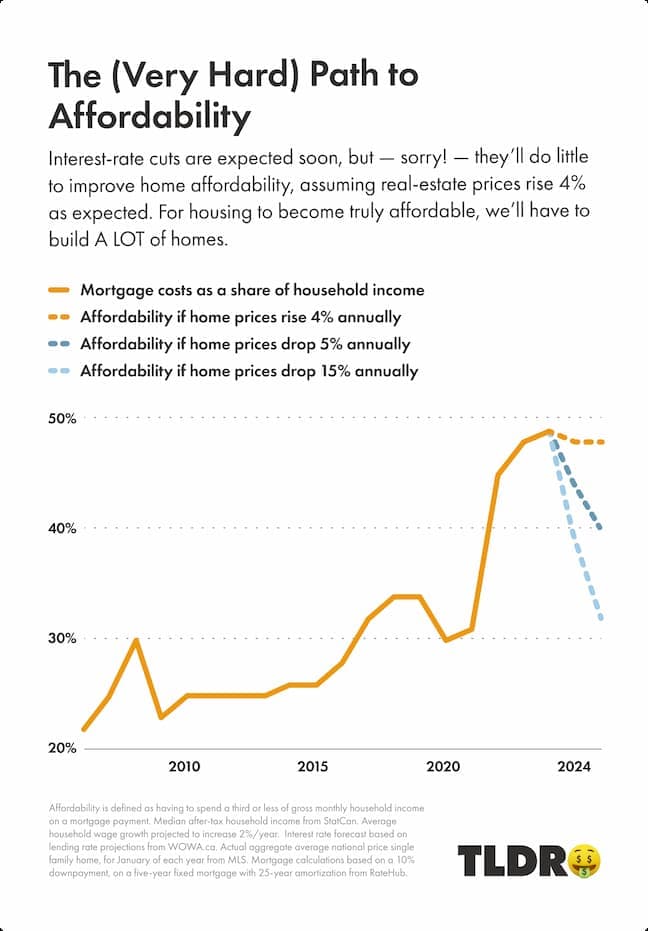
Basic economics dictate that when demand outstrips supply, prices rise. The current housing shortage has led to intense competition, resulting in double-digit price appreciation in many markets. This gap makes it difficult for first-time buyers to enter the market, forces renters to pay a higher percentage of their income toward housing, and increases the overall mortgage debt-to-income ratio across the population, slowing broader economic growth.